 LNEYA Industrial Chillers Manufacturer Supplier


How to Choose a Chiller:8 Factors to Consider
Some problems encountered during the operation of chillers are caused by the mismatch between the chosen equipment model and the actual operating conditions. To help more people reduce downtime from the outset, we have listed some factors to consider before purchasing a chiller. We hope this article will be helpful to you.
1.Size for industrial chiller capacity
Sizing is not a gut call. It is a calculation and a judgement. Get the cooling load right and you avoid two big failure modes. One is an undersized chiller that runs at full tilt and trips. The other is an oversized chiller that short cycles and wastes energy.
Always add a margin for safety. Ten to twenty percent is common. If your load swings widely pick modular chillers or staged compressors so units can track load without short cycling. If uptime is critical design for redundancy. A plain single unit with no spare can cost far more than the chiller itself when it fails.
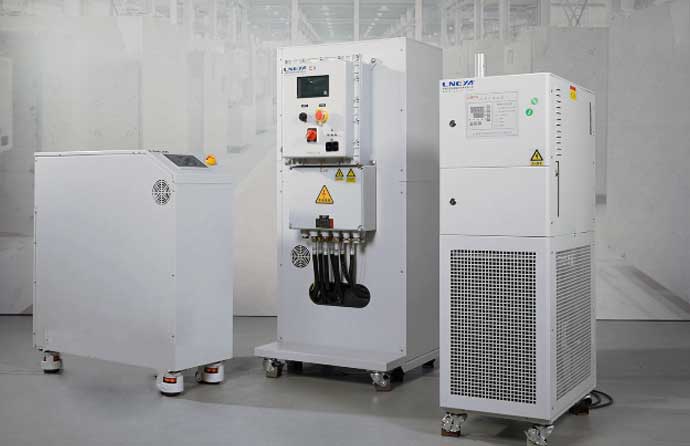
2.Type of chiller: choosing air cooled chiller or water cooled chiller
Absorption chillers
Absorption chillers run on heat instead of electric compression. They work where you already have low cost heat. Typical locations are cogeneration plants, industrial sites with waste steam, and hospitals with steam systems. Strengths are quiet operation and fewer moving parts.
Drawbacks are larger footprint and more complex thermal control. Absorption chillers can be a smart choice when fuel or waste heat is cheaper than electricity.
Mechanical compression chillers
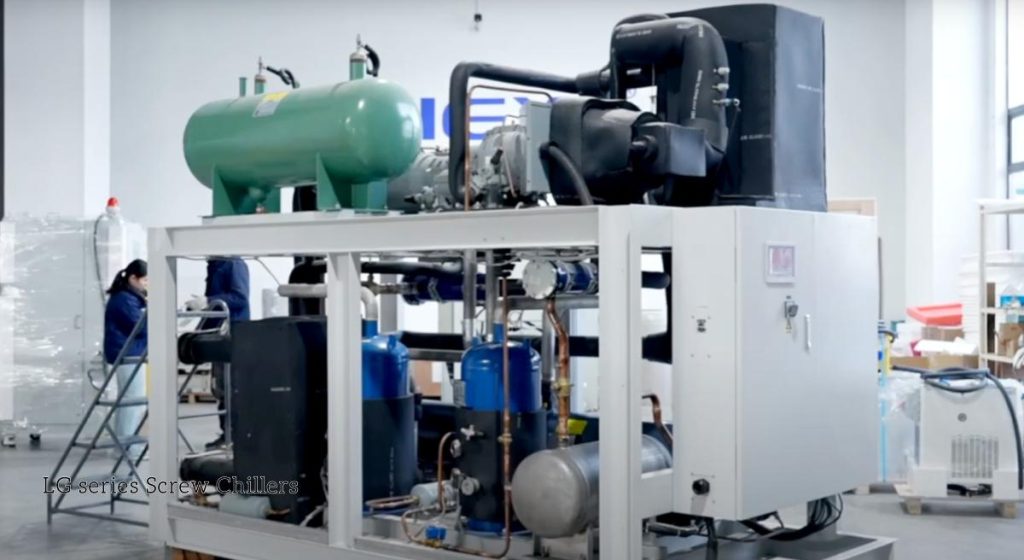
Most plant chillers use mechanical compression. They use compressors to move refrigerant and remove heat. Compressor types to consider are screw for mid to large loads, scroll for small loads, and centrifugal for very large, steady loads. Choose the compressor type based on capacity, maintenance skill on site, and your need for part load performance.
• Water cooled chiller
Water cooled chillers use a condenser water loop and a cooling tower to reject heat. They are generally more efficient for large, continuous loads. They also require water treatment, tower maintenance, and space for the tower. If your plant runs long hours and you can manage tower maintenance a water cooled chiller often lowers your energy bill.
• Air cooled chiller
Air cooled chillers reject heat to the air with fans. They are easier to install and need no tower. They work well where water is scarce or where system size is moderate. In hot climates or runs at high ambient temperature the performance gap versus water cooled gets larger. For many mid size plants air cooled chillers offer a simpler path with lower site work.


3.Application
Match the chiller to what it actually does in your plant. Different industries have different tolerances and needs.
Semiconductor and precision electronics
These applications need tight control. Tolerance can be plus minus zero point one degrees Celsius or tighter. Use a chiller with precise control valves, an electronic expansion valve, and multiple sensors. Redundant sensors and automatic alarms matter.
Medical and pharmaceutical
You must consider validation and traceable records. Choose chillers that support data logging and that come with detailed commissioning protocols. Low temperature options and compliance with GMP are common needs.
Plastics and molding
Cycle times and part quality depend on cooling speed. Here the chiller must respond fast. Consider high flow rates, larger pumps, and staged compressors so the unit can deliver bursts without losing stability.
Chemical processing
Your environment may demand explosion protected equipment and corrosion resistant materials. Ask about special seals, skid design, and piping layout. Check compatibility of the refrigerant with your process hazards.

4.Energy efficiency for energy efficient chiller selection
Energy is the cost that grows every year. Buying a more efficient chiller often pays back faster than most other plant upgrades.
COP and EER tell you performance at full load. Look beyond full load to part load metrics such as IPLV. Real plants rarely run at steady full load. VFD driven compressors and staged control keep power use down at lower loads. Heat recovery systems let you reuse waste heat for plant hot water or space heating and improve total system efficiency.
5.Temperature control precision
Precision starts with control hardware and ends with your piping and sensors. For fine control use an electronic expansion valve, a good PID loop tuned to the load, and multiple temperature sensors averaged across the process. Place sensors in the fluid stream not on panels or headers.
If your spec calls for plus minus zero point one degrees Celsius then insist on a factory test that proves that band under your expected flow and ambient conditions. Ask for a factory run test or a site acceptance test that records data for several hours. Those records save argument when a process goes out of spec.
6.Budget and total cost of ownership
Budget is more than price. Think in three buckets.
Initial purchase cost
This is the obvious line item. Air cooled chiller installs tend to be cheaper than water cooled chiller installs because you avoid tower plumbing.
Operating cost
Estimate electric use, water use for towers, regular maintenance parts, and chemical treatment for towers. Multiply by hours per year to find annual cost.
Risk cost from downtime
A cheap chiller that fails often costs production losses. If your process is high value then invest in redundancy and fast local service.
7.Safety and certifications
Safety rules vary by industry and location. Know them before you buy.
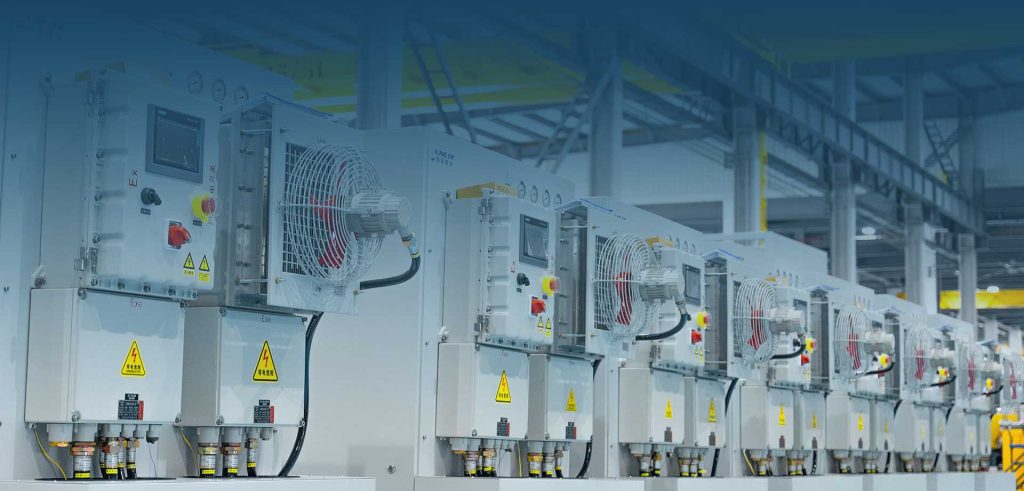
Explosion protected equipment is common in hydrocarbon handling plants. Ask for the exact classification the vendor can supply, for example a national or regional hazardous area rating. For pressure boundaries check ASME code compliance. For electrical safety ask about UL listings or equivalent.
Environmental rules affect refrigerant choice. Ask about low global warming potential refrigerants and what the vendor recommends for future proofing. Also check available service and spare parts for any refrigerant the vendor proposes.
Finally document everything. A good vendor will provide wiring diagrams, pressure test records, and a clear maintenance schedule. Those documents matter during audits and when you change personnel.
8.Manufacturer selection and long term support
The machine is only half the purchase. The vendor and the support network are the other half. Ask the following questions.
• Do they have references in your industry?
• Can they show installations with similar duty cycles and ambient conditions?
• What is lead time for critical spare parts?
• Do they provide commissioning and on site training?
• Is remote monitoring available?
• What warranty terms cover labor and travel?
A strong chiller manufacturer will help size the system, test it, and then stand behind service for years. That lowers your risk and your total ownership cost.
Find your chiller
Looking for a reliable industrial chiller? Contact LNEYA today for customized cooling solutions.

Recent Blogs
- Chiller Components and Refrigeration Fundamentals Guides
- Chiller Types and Selection Guides
- How Does a Peltier Cooler Work
- Peltier Chiller vs. Compressor Chiller
- What Is a Peltier Chiller
- OEM vs Aftermarket Chiller Spare Parts
- Chiller Surge
- Chiller Cooling Capacity Units
Catalog
- December 2025
- November 2025
- October 2025
- September 2025
- August 2025
- July 2025
- June 2025
- May 2025
- March 2025
- February 2025
- January 2025
- December 2024
- November 2024
- October 2024
- September 2024
- August 2024
- July 2024
- June 2024
- May 2024
- April 2024
- March 2024
- February 2024
- September 2023
- July 2023
- June 2023
- May 2023
- January 2023
Tag
air cooled chiller chiller Chiller Installation Chiller Maintenance chiller refrigerant chillers Cold Assembly Freezer cooling chiller cooling heating system cooling system dynamic temperature control system energy efficient chiller explosion-proof chiller freezer heating circulator industrial chiller industrial chillers industrial cooling industrial freezer industrial refrigerator jacket reactor laboratory chiller low temperature chiller news oil chiller process chiller process cooling reactor chiller reactor cooling reactor cooling heating reactor heating cooling refrigerated circulator screw chiller semiconductor chiller semiconductor test chiller sundi tcu temperature control test chamber thermostat ultra low temperature chiller vehicle test chiller water chiller water cooled chiller
Contact Us
Related Chillers


CONTACT US
TEL:
EMAIL:
WeChat & WhatsApp:

Wechat QR

Have a question or need a quote? Fill out the form below, and our team will get back to you within 24 hours.

