 LNEYA Industrial Chillers Manufacturer Supplier


What is the Difference Between Industrial Chillers and DX Systems
As we’ve seen, most standard chillers use chilled water for indirect heat exchange. However, this requires a complex piping system and lacks flexibility. For some smaller projects, this is unnecessary, and a direct expansion (DX) system is a better choice.
This article explains the differences between industrial chillers and direct expansion systems, helping you choose the right equipment for your application.
1 What is a DX system?
A DX system means direct expansion. The refrigerant travels straight to the evaporate coil that cools the air or the surface. You find DX in rooftop units, small pack units, and many comfort cooling applications. In a DX setup the cooling medium is the refrigerant itself. There is no chilled water loop. That fact makes DX systems compact and easy to place close to the load.

2 How does a DX system work?
Start with the compressor. It compresses low pressure refrigerant gas into a hot, high pressure gas. The gas flows through the condenser where heat is dumped to outside air(air-cooled unit) or to cooling water(water-cooled chiller). The refrigerant condenses into a liquid.
It then passes through an expansion device which drops its pressure and temperature. The cold refrigerant goes into the evaporator coil. Air or a surface passes over that coil and gives up heat. The warmed refrigerant returns to the compressor and the cycle repeats.
Everything happens inside a sealed refrigerant loop. Controls are usually local and simple. The system reacts quickly when cooling demand changes. You can tune a DX system to serve a single room, a single machine, or a small process area with minimal piping and pumps.
3 What are the advantages of a DX system?
DX systems are space efficient. Installation is straightforward and often cheaper up front. For a single room or one piece of equipment, DX will usually beat a chiller on installed cost and complexity.
DX systems also respond fast. If a load spikes, the local unit adjusts quickly. That speed helps when you need rapid recovery. There is no chilled water loop to balance and no large pump systems to manage.
Maintenance is simple in some ways. You do not have to manage water treatment. You avoid risks that come with water like corrosion and microbial growth. For smaller facilities, those are real savings.
4 What is a chiller system?
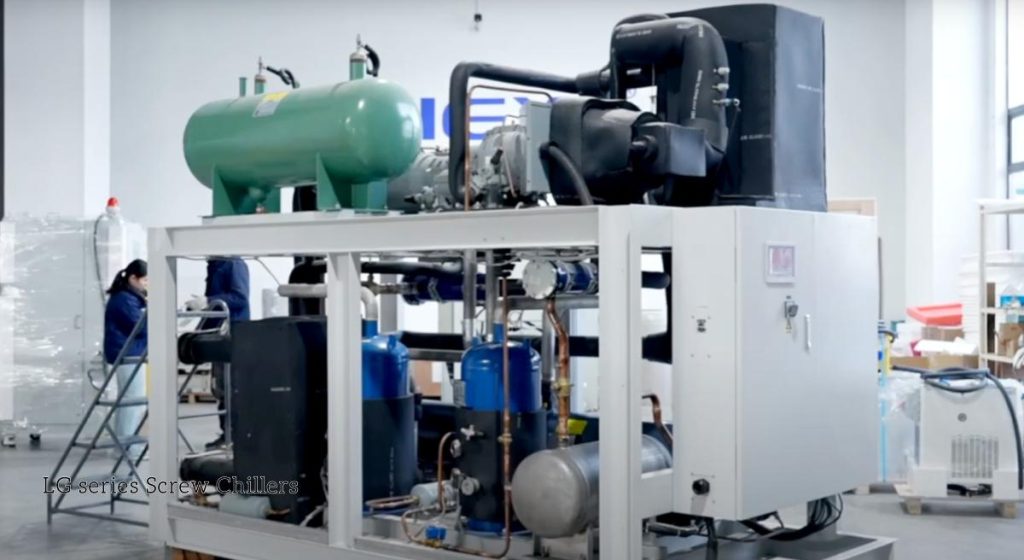
A chiller system uses a central machine to cool water. The chiller cools circulating water or a water glycol mix. That chilled water moves through the plant to air handlers, process machines, or heat exchangers. The chiller is the central plant. It supports multiple loads and spreads cooling where you need it.
Industrial chillers come in many sizes. They serve labs, molding shops, pilot plants, and large HVAC systems. The chilled water loop gives you flexibility to place loads far from the chiller without moving refrigerant across the entire building.

5 How do industrial chillers work?
The chiller uses the same basic refrigeration cycle as a DX system. Compressor, condenser, expansion, and evaporator are still there. The key difference is what the evaporator cools. In a chiller the evaporator cools chilled water and that water becomes the carrier of cooling energy.
Pumps move chilled water to each load. Control valves, sensors, and a building management system handle flow and temperature. The loop often includes expansion tanks, strainers, and heat exchangers. You can split the plant into zones. Each zone can have its own temperature set point and flow control.
Because chilled fluid carries heat well, a chiller plant can move large amounts of energy over long runs. That lets one central unit support many processes. You also get options that DX systems rarely offer on the same scale. Examples are heat recovery to preheat domestic water, staged compressors for partial load efficiency, and free cooling when outside conditions allow.
6 What are the advantages of a chiller system?
Chillers scale. If your factory has several machines that need tight temperature control, chilled water connects them without a refrigerant circuit at each point of use. That centralization simplifies service in large plants.
Precision is another big plus. With good controls you can hold narrower temperature bands than most DX configurations can manage. That matters if your process is sensitive to even small swings.
Energy options are richer for chillers. Variable speed drives, heat recovery, and free cooling can cut operating cost significantly. Chiller plants also give you redundancy options that keep critical lines running when one compressor is down.
There are trade offs though. A chilled water system needs more space. Pumps add electrical load. Water chemistry needs attention to avoid scaling and corrosion. Those are manageable but they add to the long term operations picture.

Explore high-efficiency and energy-saving chiller solutions!
7 When to use an industrial chiller or a DX system?
Think about scale and precision first. If you only need to cool a single room or a single machine, a DX system often wins. It is compact and cheap to install. It will get the job done and it will do it fast.
If you need to serve many points or you require tight temperature control, the chiller becomes more attractive. A chiller plant makes sense when you will add loads over time or when the cooling demand is large. Chillers handle the heavy lifting better.
Also weigh site constraints. Do you have reliable water treatment and space for a plant? Are refrigerant leakage rules strict where you operate? Does the facility require heat recovery? Each of these items nudges the decision one way or the other.
Some cases where a mix is best. Use DX for a small office or a test cell near the wall. Use chilled water for the process line in the middle of the plant. A hybrid approach can give you the best of both worlds without overbuilding either side.
Choosing the right system for your needs
We hope this article has helped you gain a better understanding of industrial chillers and DX systems. If you still have questions about selecting the right cooling equipment, our experts are happy to assist you.
Already determined the type of equipment you need and looking for a reliable chiller manufacturer? Our team can provide you with a customized solution.

Recent Blogs
- Chiller Components and Refrigeration Fundamentals Guides
- Chiller Types and Selection Guides
- How Does a Peltier Cooler Work
- Peltier Chiller vs. Compressor Chiller
- What Is a Peltier Chiller
- OEM vs Aftermarket Chiller Spare Parts
- Chiller Surge
- Chiller Cooling Capacity Units
Catalog
- December 2025
- November 2025
- October 2025
- September 2025
- August 2025
- July 2025
- June 2025
- May 2025
- March 2025
- February 2025
- January 2025
- December 2024
- November 2024
- October 2024
- September 2024
- August 2024
- July 2024
- June 2024
- May 2024
- April 2024
- March 2024
- February 2024
- September 2023
- July 2023
- June 2023
- May 2023
- January 2023
Tag
air cooled chiller chiller Chiller Maintenance chillers Cold Assembly Freezer cooling chiller dynamic temperature control system energy efficient chiller heating circulator industrial chiller industrial chillers industrial cooling industrial freezer industrial refrigerator jacket reactor laboratory chiller low temperature chiller news process chiller process cooling reactor cooling reactor heating cooling refrigerated circulator screw chiller semiconductor chiller semiconductor test chiller sundi tcu temperature control test chamber thermostat ultra low temperature chiller vehicle test chiller water chiller water cooled chiller
Contact Us
Related Chillers

CONTACT US
TEL:
EMAIL:
WeChat & WhatsApp:

Wechat QR

Have a question or need a quote? Fill out the form below, and our team will get back to you within 24 hours.

