 LNEYA Industrial Chillers Manufacturer Supplier


OEM vs Aftermarket Chiller Spare Parts:Quality, Cost and Risks
In our article on chiller spare parts lists, we introduced common chiller spare parts and their replacement frequencies, helping many people create their own spare parts lists. However, new problems arise when they start sourcing parts.
OEM spare parts are typically more expensive and harder to obtain than aftermarket spare parts. Many people want to choose the latter but worry about quality and compatibility. This is a very common issue; you need to weigh quality, cost, and risk.
In this article, you will understand the differences between OEM and aftermarket spare parts, learn how to differentiate them in the market, and how to make the best choice. Be sure to read to the end.
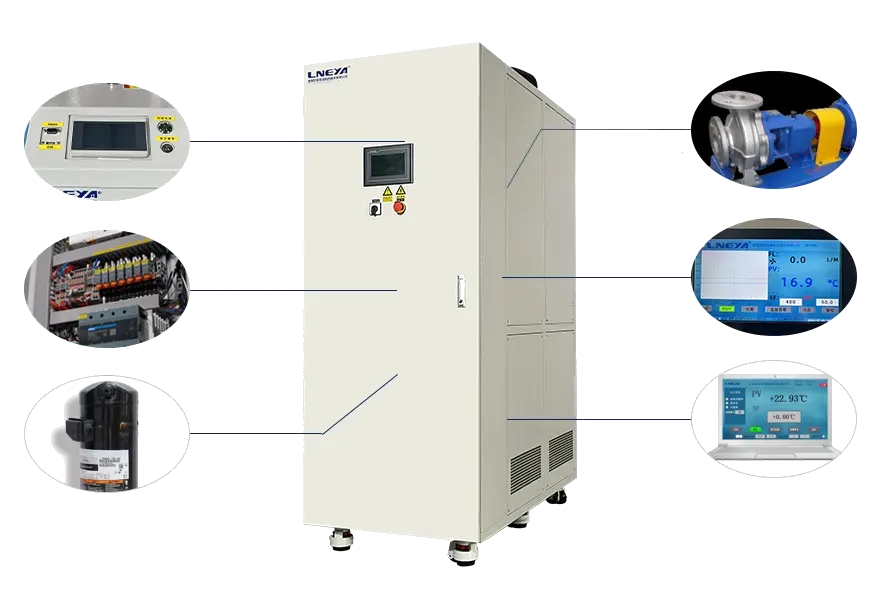
What Are OEM Chiller Spare Parts?
OEM chiller spare parts are components made by the same company that manufactured your chiller equipment. They are designed to match your system’s specifications, so they usually offer better compatibility and reliability. These parts often help maintain performance, safety and warranty coverage.
OEM parts come from the original manufacturer, so the quality, materials and tolerances follow the same standards as the equipment itself. For many users in semiconductor, pharmaceutical and chemical processing, OEM chiller spare parts provide peace of mind because they work exactly as expected.
OEM parts are also easier to verify. They come with factory labels, batch codes and official technical documentation. When your system requires precise temperature control or operates at extreme ranges such as -80℃ to 200℃, these components can help keep the system stable.
However, OEM parts are usually more expensive. Because they come directly from the brand, there is less competition and the supply chain is more controlled. Many buyers also notice longer lead times for compressors, sensors and electronic boards.
What Are Aftermarket Chiller Spare Parts?
Aftermarket chiller spare parts are components manufactured by third party companies. They are designed to be compatible with specific chiller models and can offer a more cost effective alternative to OEM parts. The quality can vary, so choosing reputable manufacturers is important.
Aftermarket parts exist in every industry, including HVAC, automotive and industrial refrigeration. For chillers, common aftermarket components include pumps, sensors, valves, relays, motors and filters. Many factories prefer them because the price is lower and delivery is faster.
Some aftermarket brands even focus on improving durability or offering updated materials compared to older OEM designs. This is why you will sometimes see discussions like “OEM vs aftermarket Reddit” where users debate real world results from different suppliers.
However, quality is not consistent across the market. Some parts may not match the exact tolerances required for high precision chillers used in semiconductor or medical equipment. Buyers should request technical sheets, certifications and compatibility confirmations before purchasing.
OEM vs Aftermarket Chiller Spare Parts: Quality Comparison
OEM parts usually provide consistent quality because they follow original designs. Aftermarket parts can perform well too, but the quality depends on the manufacturer. The best choice depends on your chiller’s application and the performance you require.
OEM chiller spare parts are produced under strict quality control. Each component is tested and approved for the exact system. This ensures consistent performance in sensitive applications such as high precision thermal control.
Aftermarket parts, on the other hand, can be excellent when purchased from trusted suppliers. Some offer reinforced materials or improved designs. However, there are also low quality products that focus only on cost reduction.
For users who depend on precise temperature stability, OEM parts are often safer. For general cooling applications with less demanding requirements, a high quality aftermarket part can be a very practical option.
1.Is It Better to Use OEM or Aftermarket Parts?
OEM parts offer higher reliability, while aftermarket parts can deliver similar performance at a lower cost. The best choice depends on your budget, your chiller’s working conditions and how critical the system is to your production.
Many buyers choose OEM for compressors, temperature sensors and control boards because these components directly affect stability. A small difference in materials or calibration can create temperature drift or system alarms.
In contrast, aftermarket parts are often preferred for pumps, hoses, connectors, fittings and non critical items. These components do not always require tight tolerances. Choosing aftermarket versions can significantly lower maintenance costs.
When you are unsure, consider how a failure would affect your process. For industries where downtime is extremely costly, OEM may be the safer choice.
2.Do Most Mechanics Use Aftermarket Parts?
Many service technicians use a mix of OEM and aftermarket parts. They often choose aftermarket components for cost sensitive repairs and OEM parts for high precision or high risk applications.
In the HVAC and industrial cooling industry, technicians know which components truly require OEM quality. They may use aftermarket pumps or filters, but rely on OEM control boards or compressors because these parts affect system performance more directly.
This mixed approach helps balance cost and reliability. It also explains why the discussion “OEM vs aftermarket price difference” appears frequently among equipment users and technicians.
Cost Comparison: OEM vs Aftermarket Price Difference
OEM chiller spare parts typically cost more because they follow strict manufacturing standards and come directly from the brand. Aftermarket parts can reduce costs by 20 to 60 percent, depending on the component and supplier.
For many factories, aftermarket parts provide significant savings in daily maintenance. When replacing consumables or non critical items, the lower cost can reduce operating expenses without affecting system performance.
However, the situation changes when the part plays a major role in temperature accuracy or safety. Replacing an OEM sensor with a low quality aftermarket version may cause errors or system shutdowns. In such cases, the initial savings may not be worth the potential risks.
Risks to Consider Before Choosing Your Chiller Spare Part
Both OEM and aftermarket parts have risks. OEM parts may be expensive and slow to deliver. Aftermarket parts may not match the exact specifications required by high precision chillers. Understanding these risks helps you make the right choice.
If your system runs continuously or controls temperature sensitive products, even small compatibility issues can cause problems. It is important to consider performance, warranty impact and long term maintenance costs.
1.What Are the Disadvantages of OEM Parts?
OEM parts cost more and sometimes have longer lead times. They may also require purchasing full assemblies instead of individual components.
The higher price comes from controlled production and brand certification. In urgent situations, waiting for OEM parts may cause downtime. Some OEMs only provide entire modules, for example a complete control board instead of a single relay.
2.What Are the Disadvantages of Aftermarket Parts?
Aftermarket parts vary in quality. Some items may not fit perfectly or may not match the exact calibration of the original component.
If the supplier does not provide proper documentation or testing, the part may cause errors or reduce system efficiency. Poor compatibility can also affect your warranty. This is why choosing a trusted aftermarket provider is essential.
How to Tell OEM Parts From Aftermarket Parts?
OEM parts come with factory labels, serial numbers and official packaging. Aftermarket parts may look similar, but the branding, materials and documentation often differ.
You can check the product code, manufacturer name, technical drawings and materials. OEM instructions usually include detailed troubleshooting or assembly guidelines. Aftermarket products should provide compatibility information that matches your model.
Avoid choosing parts only based on appearance. Two components may look identical but perform differently under high temperatures or long term operation.
How to Choose Between OEM and Aftermarket Chiller Spare Parts?
Choose OEM parts when your chiller requires strict accuracy or supports critical applications. Choose aftermarket parts when cost efficiency and fast delivery are the priority, especially for non critical components.
Ask yourself these questions.
1.Does this part affect temperature accuracy?
2.Would a failure cause expensive downtime?
3.Is the aftermarket supplier reputable and well reviewed?
4.Can they provide compatibility information and testing data?
The safest approach is often a combination of OEM and high quality aftermarket parts. Use OEM for precision components and use aftermarket parts for general items that do not require tight tolerances
This strategy helps control costs while maintaining reliable performance. Over time, it can also simplify maintenance planning and reduce unexpected failures.
Choosing Safe and Cost Effective Chiller Spare Parts
If you want help identifying the right parts for your chiller model, LNEYA can provide original parts and proven compatible spare parts, along with free selection support.
Get a Detailed Quote for Free!
FAQ


CONTACT US
TEL:
EMAIL:
WeChat & WhatsApp:

Wechat QR


