 LNEYA Industrial Chillers Manufacturer Supplier


What Is Horsepower in Chillers: Understand HP
If you have ever tried to compare chillers and found the specs full of confusing numbers, you are not alone. One of the most misunderstood terms is horsepower (HP), a key rating that determines how powerful a chiller is and how much heat it can remove. Many buyers think higher HP always means better performance, but that is not always the case.
In this guide, you will learn what horsepower really means in chillers, how it relates to cooling capacity and energy efficiency, and how to choose the right system for your needs.
What Does Horsepower (HP) Mean in a Chiller?
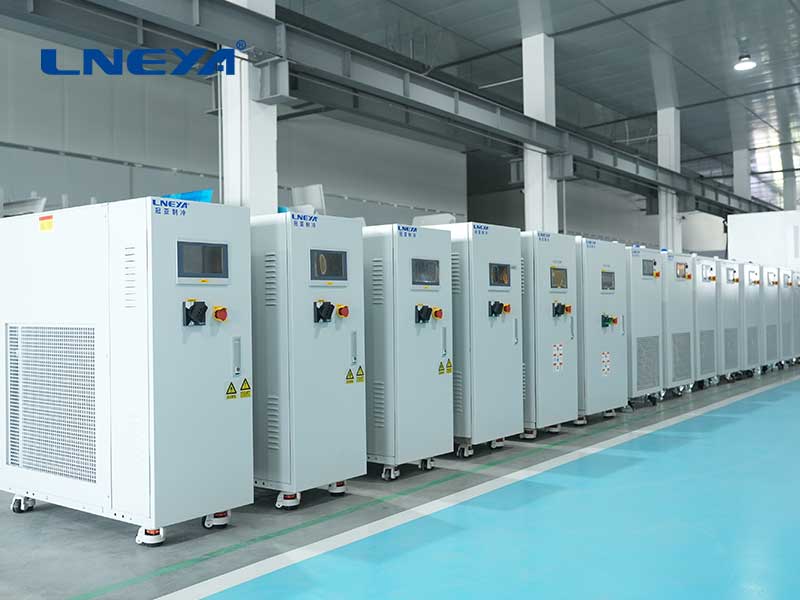
Horsepower in a chiller refers to the mechanical power of its compressor, showing how much work it can perform to move heat. A higher HP means greater power to handle large heat transfer. However, it does not always equal higher efficiency.
Horsepower Definition and Unit Conversion
Horsepower (HP) is a unit of mechanical power. In chillers, horsepower (HP) represents the compressor’s input power and defines cooling ability in relation to electrical demand. 1 HP equals 0.746 kilowatts (kW). This conversion helps engineers compare chillers globally since many use kW instead of HP.
For instance, a 15 HP compressor equals about 11.2 kW. Manufacturers often list HP alongside cooling capacity in tons or kilowatts. Knowing this conversion prevents confusion when comparing chillers from different countries.
HP in Compressor vs HP in Whole Chiller
Compressor HP refers to the power used by the compressor alone, while total chiller HP includes all system components. Understanding this difference helps you avoid overestimating performance.
The compressor HP covers the main mechanical work of compressing refrigerant. The total system HP, however, adds pumps, fans, and control circuits. Some suppliers list only compressor HP, while others state total input HP. For example, a “20 HP chiller” might actually draw 24 HP when including pumps.
Always ask suppliers whether their HP rating refers to the compressor or total system.
Why Is Horsepower Important for Chiller Performance?
Horsepower determines how effectively a chiller can remove heat under specific load and temperature conditions. It reflects both cooling power and electrical consumption.
Chiller HP directly affects cooling speed and stability. A system with insufficient HP struggles during peak loads. Too much HP increases cost and energy use. Balancing HP ensures optimal performance and reliability.
HP and Cooling Capacity Relationship
Horsepower and cooling capacity move in the same direction. Higher HP usually means higher cooling output. However, their relationship is not always linear due to system design and efficiency differences.
Cooling capacity is often measured in refrigeration tons or kW. As a general guide, 1 refrigeration ton equals about 3.516 kW of cooling, which requires roughly 1 HP of compressor input. For example, a 10 HP chiller offers about 35 kW of cooling. But compressor type, ambient conditions, and condenser design can shift this ratio. Therefore, when evaluating cooling capacity, never judge its performance solely based on horsepower.
HP and Energy Efficiency
Horsepower affects energy efficiency because it dictates power draw for a given cooling output. Efficient chillers deliver more cooling per HP consumed.
Compare chillers by their COP (Coefficient of Performance) or EER (Energy Efficiency Ratio). These values show how effectively the chiller turns power into cooling. A higher COP means the unit uses less energy for the same HP. For instance, two 10 HP chillers can have different energy costs if one has a COP of 5 and another 3. Always look beyond HP and evaluate efficiency ratings before buying.
How to Calculate Required Horsepower for a Chiller
To find the right chiller HP, calculate your total heat load and match it to cooling capacity.
Follow these steps:
• Identify total heat generated by your process in kW or kcal/h.
• Convert that load into cooling tons or kW using 1 ton = 3.516 kW. Divide cooling capacity by 3.516 to estimate HP.
For example, if your process produces 70 kW of heat, you need around 20 HP of cooling. Add 10–15% margin for safety. Avoid oversizing, which can cause short cycling and wasted energy.
Common Misunderstandings About Chiller Horsepower
Many users believe higher HP always means better cooling, but that is not true. The best chiller depends on efficiency, not raw power.
Common mistakes include:
• Confusing compressor HP with total system HP.
• Ignoring COP and assuming higher HP equals faster cooling.
• Overlooking voltage, frequency, and regional power standards when comparing units.
How to Choose the Right HP for Your Application
Select HP based on process heat load, required temperature, and operation time. he correct HP ensures stable temperature control and long equipment life.
Start with your cooling demand in kW or tons. Then match it to a chiller’s rated capacity and HP. Consider future expansion to avoid undersizing. Also, factor in environmental conditions. A chiller running outdoors in summer may need extra HP to maintain output.
Matching HP with Application Type
Each industry needs a specific HP range to match its cooling load. Correct HP selection prevents temperature drift and system stress. Always check with your chiller manufacturer to confirm HP ratings match real use conditions.
• Plastic molding: 5–20 HP for small to medium molds.
• Laser cooling: 3–10 HP for moderate thermal loads.
• Chemical reactors: 20–100 HP depending on batch size.
• Semiconductor tools: 10–50 HP for precise control.
Balancing Cost and Performance
Finding the right HP balance helps reduce energy costs while maintaining efficiency. Too much HP wastes money; too little risks process failure.
• Calculate annual operating hours and energy rate.
• Compare chillers with similar HP but different efficiency ratings.
• Choose a unit that meets your load with minimal excess HP.
Exploring LNEYA Cooling Solutions
If you want a chiller that delivers true efficiency and accurate performance data, LNEYA offers a full range of tested and verified industrial chillers. Our systems are engineered with precise HP-to-capacity ratios and advanced control logic to ensure maximum stability and energy savings.
Visit https://www.lneya.com/contact to get expert help choosing the right chiller for your application.
FAQ


CONTACT US
TEL:
EMAIL:
WeChat & WhatsApp:

Wechat QR


