 LNEYA Industrial Chillers Manufacturer Supplier


Industrial Chillers for MRI Machines Cooling Application
Many hospitals and imaging centers search for industrial chillers for MRI machines because their existing cooling systems can’t keep the magnet temperature stable. You might have seen scan errors, unexpected shutdowns, or high service costs when the MRI overheats.
This guide explains why MRI machines need dedicated chillers, how these cooling systems work, and what to look for when choosing one. By the end, you’ll know how to select a medical-grade chiller that protects your magnet, reduces downtime, and keeps imaging performance consistent day after day.
Why MRI Machines Need Dedicated Chillers
MRI machines need dedicated chillers to maintain precise temperature and prevent imaging errors.
MRI systems generate a large amount of heat from their superconducting magnets and RF amplifiers. Without an effective cooling system, the temperature can rise and cause the magnet to lose its superconducting state. This leads to expensive downtime and poor image quality.
A dedicated medical chiller keeps the magnet and electronics at a stable temperature. It prevents thermal drift and maintains consistent imaging conditions throughout the day. Hospitals that operate MRI machines continuously rely on chillers for both performance and safety.
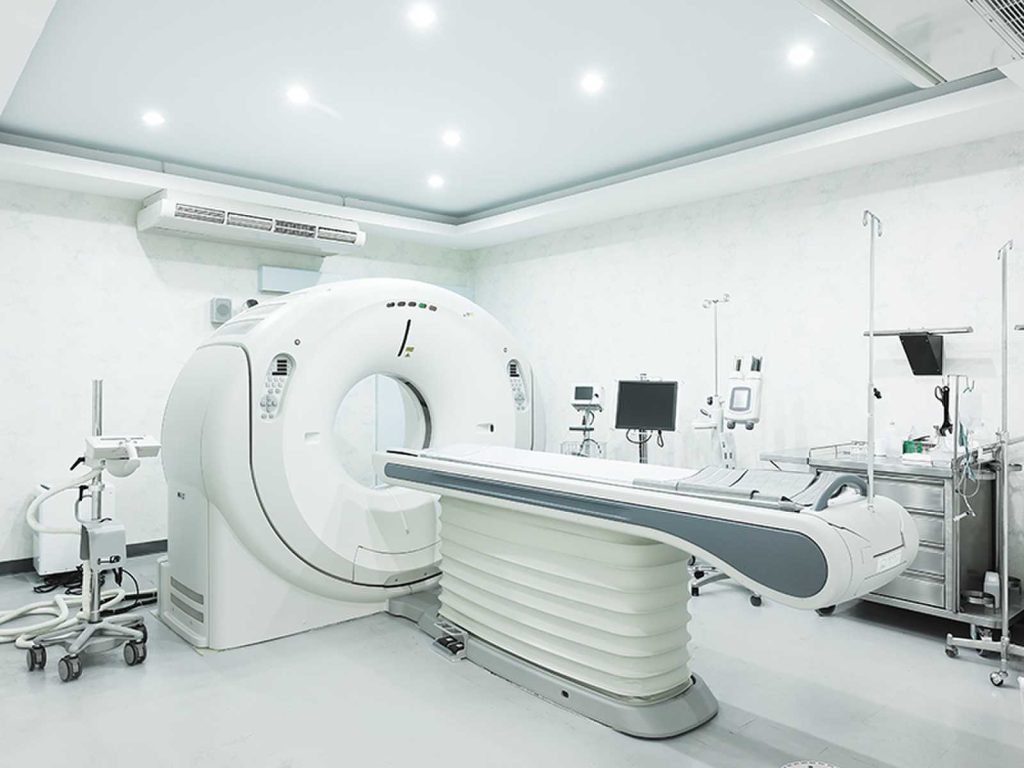
How MRI Cooling Systems Work
An MRI cooling system removes heat from the magnet and electronics and transfers it to the environment.
The process starts when warm coolant from the MRI magnet enters the chiller’s heat exchanger. Inside, refrigerant absorbs the heat and releases it through a condenser to air or water. The cooled liquid then returns to the MRI machine to maintain its ideal operating temperature.
Modern MRI chillers use closed-loop circulation. This means the coolant never contacts external air, preventing contamination and reducing maintenance. Flow sensors and temperature controllers ensure stable operation even during heavy scanning sessions.
What Is an MRI Chiller
An MRI chiller is a specialized cooling unit designed to control temperature for MRI systems.
Unlike standard industrial chillers, an MRI chiller uses non-magnetic materials and medical-grade components. It operates quietly, provides precise temperature control, and runs continuously without interruption. A typical unit circulates chilled water or glycol to maintain the magnet’s superconducting coil near 4 Kelvin through indirect cooling.
Hospitals and imaging centers install these systems to ensure MRI uptime. Using a non-specialized chiller can cause magnetic interference or unstable performance, risking both image accuracy and patient safety.
Benefits of Using a Dedicated MRI Chiller
A dedicated MRI chiller improves imaging stability, reduces downtime, and extends equipment life. Here are the main benefits:
Hospitals using dedicated MRI chillers experience fewer interruptions and better return on investment compared to those relying on standard cooling systems.
Key Requirements for MRI Chillers
An MRI chiller must keep temperature stable, run continuously, and stay safe in magnetic environments to protect imaging accuracy.
Temperature Stability and Precision
MRI chillers must maintain temperature within ±0.1°C to protect imaging performance.
MRI systems are sensitive to even minor temperature changes. A fluctuation of one degree can cause the magnet to drift, leading to distorted images. A precision chiller uses a PID temperature controller to keep coolant temperature steady. Always verify the chiller’s control accuracy before installation.
Non-Magnetic Materials and Safety Design
MRI chillers use non-magnetic materials to avoid interference with magnetic fields.
Stainless steel and copper are common in cooling circuits, while the frame and fasteners must be non-magnetic. Electrical components require shielding to prevent electromagnetic interference. Choose units specifically rated as “MRI-compatible chillers” for guaranteed safety.
Continuous Operation and Reliability
MRI chillers must operate 24/7 without interruption or performance loss.
A reliable medical chiller includes redundant pumps, dual compressors, and alarm systems. It can continue running even if one component fails.
Noise and Vibration Control
Low noise and vibration prevent disruption to imaging and patient comfort.
High vibration can affect magnet alignment. A quality MRI chiller includes anti-vibration mounts, quiet compressors, and sound insulation. Install the chiller in a separate mechanical room or outdoors to keep the MRI suite quiet.
Types of MRI Chillers
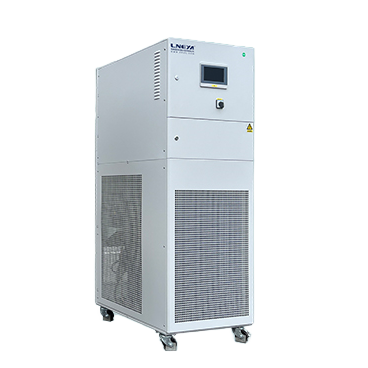
MRI chillers come in water-cooled, air-cooled, and portable types, each suited for different site conditions and cooling demands.
Water-Cooled MRI Chillers
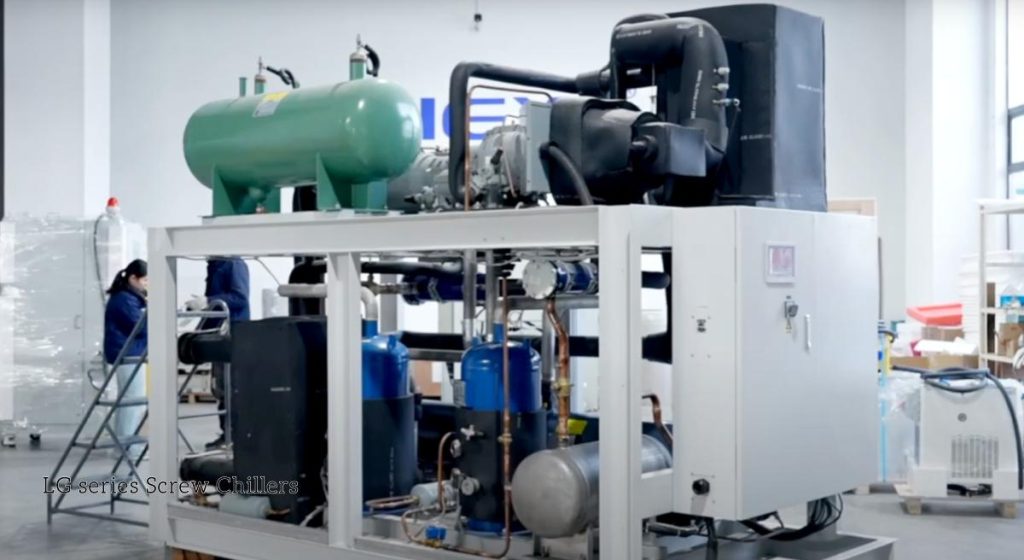
Water-cooled chillers use cooling towers to remove heat and offer high energy efficiency.
They are ideal for hospitals with existing central water systems. These chillers provide stable operation and lower running costs in large facilities. However, they require regular water treatment and additional plumbing.
Air-Cooled MRI Chillers
Air-cooled chillers reject heat to the surrounding air using fans and condensers.
They are easy to install, compact, and suitable for medium or small imaging centers. Air-cooled units perform best in well-ventilated spaces. They may lose some efficiency in very hot climates.
Portable MRI Chillers
Portable MRI chillers are compact systems for temporary or mobile imaging units.
They are designed for easy transport and plug-and-play operation. Portable chillers are ideal for mobile MRI trailers or backup cooling.

How to Choose the Right MRI Chiller
To choose the right MRI chiller, match the cooling load, flow rate, and stability requirements of your MRI system while considering site conditions.
1.Determine MRI Cooling Load
Calculate total heat load to size the chiller correctly.
Manufacturers specify the cooling capacity required for each MRI model. Always include additional capacity (10–20%) for safety. An undersized chiller will overheat, while an oversized one will waste energy.
Learn more:
How to calculate chiller cooling capacity
Chiller load and cooling capacity
2.Match Temperature and Flow Rate Requirements
Check that the chiller matches the MRI’s flow and temperature specifications.
Each MRI machine needs a specific coolant temperature and flow rate for optimal performance. Ensure your medical chiller can maintain both parameters under peak conditions. Flow sensors and digital controllers help with real-time adjustment.
3.Consider Installation Environment
Select a chiller based on available space, ventilation, and noise limits.
For indoor areas, air-cooled chillers need good airflow. For limited spaces, water-cooled models might be better. Always leave enough room for service access and future upgrades.
4.Verify Certification and Compliance
Choose certified chillers that meet international medical standards.
Look for CE, UL, and ISO 13485 certification. These confirm the unit meets safety and performance standards for hospital environments. Certified MRI chillers also simplify inspection and approval processes.
LNEYA MRI Chiller Solutions
LNEYA designs and manufactures high-precision MRI chillers for stable medical temperature control.
Our MRI chillers feature ±0.1°C temperature accuracy, non-magnetic construction, and 24-hour continuous operation. We offer both air-cooled and water-cooled options with customizable capacities. Each LNEYA medical chiller includes smart monitoring, low-noise operation, and robust safety protections.
If you are planning a new MRI installation or need a replacement chiller, contact our team for a customized cooling solution tailored to your system.
Need a custom cooling solution for your MRI machine?
FAQ About MRI Chillers


CONTACT US
TEL:
EMAIL:
WeChat & WhatsApp:

Wechat QR


