 LNEYA Industrial Chillers Manufacturer Supplier


Difference Between Chiller and Air Conditioner
If you have ever wondered about the difference between a chiller and an air conditioner, you are not alone. Many people assume they do the same job because both remove heat. But once you look closer, the way they work and where they perform best are completely different.
In this guide, you will learn what makes chillers and air conditioners different, how each works, and how to choose the right system for your specific cooling needs.
What Is a Chiller?
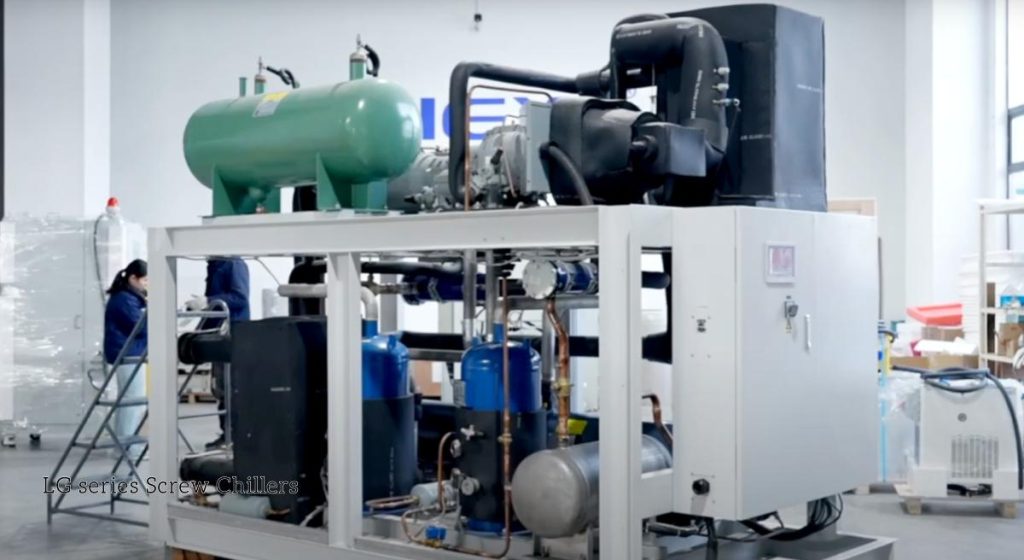
A chiller is a machine that removes heat from liquids to cool equipment or industrial processes.
It circulates chilled water or glycol through a closed loop. The refrigerant inside absorbs heat and rejects it through a condenser. This keeps machines like lasers, reactors, or plastic molds at a stable temperature.
Chillers are built for continuous operation and precise control. They handle higher heat loads than standard AC systems.
What Is an Air Conditioner?
An air conditioner cools and dehumidifies indoor air to keep people comfortable in homes or offices.
It pulls warm air from a room, absorbs heat with refrigerant, and blows cool air back. AC units are designed for comfort cooling, not industrial process control.
They work well in spaces with moderate temperature needs. A split AC, for example, keeps a small office steady at 24°C. But it can’t manage the precise control needed in a lab or factory.
Using an air conditioner for process cooling can cause failures. These systems aren’t made for nonstop operation or high heat loads like chillers are.
Key Differences Between Chillers and Air Conditioners
1.Design Purpose
Chillers are built for process cooling, while air conditioners are made for comfort cooling. Each serves a completely different goal.
A chiller keeps industrial equipment stable during production. It removes heat from machinery, lasers, or chemical processes that must stay at a precise temperature.
For instance, a semiconductor chiller may hold ±0.1°C accuracy to protect wafers. Air conditioners, on the other hand, make spaces comfortable for people. They cool the air inside rooms or offices to a pleasant range, usually between 22°C and 26°C.
2.Temperature Range
Chillers operate across a much wider temperature range than air conditioners. Most air conditioning systems can only cool down to around 15°C. Chillers can go far lower. Some reach -40°C for industrial and laboratory uses. For example, a pharmaceutical plant might use a glycol chiller to maintain -20°C in a reactor jacket. A typical rooftop AC unit cannot handle that load.
3.Temperature Control Accuracy
Chillers offer far tighter temperature control than air conditioners. Accuracy matters more than comfort in industrial cooling.
Air conditioners work in cycles. They turn on and off based on room temperature swings of 1–2°C. That’s fine for comfort but not for production. Chillers use PID or PLC control systems to maintain temperature with almost no fluctuation.
For instance, in laser cutting, even a small rise in coolant temperature can affect beam alignment. A process chiller prevents that. If your application involves sensitive instruments or chemical reactions, pick a chiller with precise control logic and steady circulation pumps.
4.Cooling Medium
Chillers use water or glycol as the cooling medium, while air conditioners use air directly.
In a chiller system, the compressor cools a water circuit that flows through heat exchangers or process lines. That closed-loop system ensures efficient heat removal and stable operation.
Air conditioners, instead, move air through evaporator coils and blow it into rooms. The difference means chillers can handle heavy thermal loads, while AC units rely on airflow and ambient temperature.
If you need indirect cooling for machines, use a water-cooled chiller. For office or residential comfort, air conditioning is simpler and cheaper.
5.Cooling Capacity
Chillers deliver much higher cooling capacity than air conditioners. That makes them ideal for continuous and heavy-duty use.
An air conditioner might serve a single office or building. A chiller can cool an entire factory line or multiple processes at once. For example, a 200-ton industrial chiller can cool several plastic molding machines simultaneously.
Higher capacity also means larger compressors, stronger pumps, and higher power requirements. When sizing a chiller, engineers look at total heat load, flow rate, and safety margins. Overestimating capacity wastes energy, while undersizing causes unstable temperatures and equipment wear.
6.Application
Chillers and air conditioners belong in different worlds of cooling. Each fits specific types of work.
Chillers serve industrial, laboratory, and medical settings. You’ll find them in chemical plants, data centers, and MRI machines. They remove heat from process fluids or specialized equipment.
Air conditioners cool human environments like offices, homes, and shops. They focus on comfort and air quality rather than temperature precision. Confusing the two can be costly. Always start by defining your cooling goal before picking the system type.
Conclusion
If your work involves labs, factories, or test systems, a chiller offers better stability, tighter temperature accuracy, and long-term durability. For spaces where people work or relax, an air conditioner is simpler and more economical.
LNEYA designs and manufactures a wide range of industrial chillers and precision air conditioners. Our team can help you select or customize the ideal system to meet your cooling performance, efficiency, and budget goals.
Get a Detailed Quote for Free!
FAQ


CONTACT US
TEL:
EMAIL:
WeChat & WhatsApp:

Wechat QR


