 LNEYA Industrial Chillers Manufacturer Supplier


Explosion Proof Chiller VS Intrinsically Safe Chillers:
Differences and Applications
In facilities, one wrong spark could stop the entire site. Some plants handle solvents, vapors, or fine powders every day. Cooling equipment must do its job without adding risk. When clients ask us whether they should use an explosion-proof chiller or an intrinsically safe chiller, we tell them that the answer depends on the hazard level and the layout of their process.
Both designs aim for safety, but they work in very different ways.
What is Intrinsically Safe
Intrinsic safety or IS is about limiting the energy inside electrical circuits. The idea is simple. Even if a fault happens the energy level will never be enough to ignite gas or dust. That means current and voltage are kept very low. Barriers and isolators control the circuit so no spark or hot surface can set off an explosion.
IS design shows up often in sensors, transmitters, and control wiring. Think about a temperature probe that runs into a reactor full of solvent. The electronics behind that probe must be safe even if a cable gets pinched or shorted. An IS chiller uses this approach for the control and monitoring parts of its system.
What is Explosion Proof
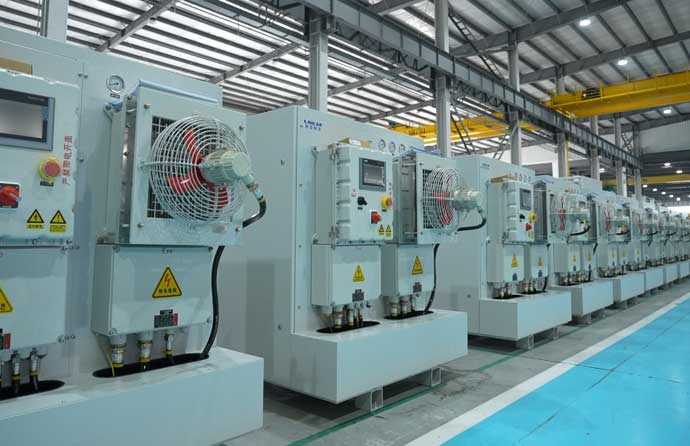
Explosion proof or EX is about containment. Instead of limiting the energy inside the circuit, EX puts all potentially hot or sparking components inside a heavy enclosure. If an arc or spark occurs, it stays trapped. The enclosure is built to resist internal pressure and cool any escaping gases so they cannot ignite the outside atmosphere.
An EX chiller often looks rugged with sealed boxes, thick cable glands, and reinforced housings. You will see them in paint shops, chemical plants, and refineries where volatile atmospheres exist.
Key Differences Between Intrinsically Safe and Explosion Proof
An IS chiller prevents ignition by design. Circuits never reach the energy level needed to light off gas or dust. You can run IS wiring in hazardous zones with less mechanical protection. The tradeoff is that IS circuits are limited in power. They work best for sensors and low energy devices.
An EX chiller prevents ignition through containment. Circuits may have normal industrial power levels. They are simply housed inside certified enclosures. The tradeoff is bulk and weight. Cabling and enclosures are heavier. Service takes longer since seals must be maintained.
The following table highlights the key differences between IS and EX chillers:
| Aspect | Intrinsically Safe (IS) Chiller | Explosion Proof (EX) Chiller |
| Working Principle | Limits circuit energy so it cannot ignite gas or dust | Contains sparks or arcs inside heavy enclosures |
| Typical Power Level | Low power, suitable for sensors and control circuits | Supports high power equipment such as compressors |
| Installation | Lightweight wiring, easier to install in hazardous zones | Requires certified enclosures and heavy cabling |
| Maintenance | Easier access, less complex | Slower service due to sealed housings and strict inspection |
| Cost | Lower wiring cost, limited equipment range | Higher upfront cost, lower cost per ton in large systems |
| Flexibility | Ideal for labs, pilot plants, small-scale setups | Designed for industrial plants, refineries, paint shops |
| Certification Standards | IEC 60079-11, NEC Class I Div 1 IS circuits | IEC 60079-1 (Ex d), NEC Class I Div 1 EX enclosures |
| Best Applications | Pharmaceutical lines, testing labs, compact setups | Chemical plants, battery plants, solvent-handling facilities |
Which is Better Intrinsically Safe Chiller or Explosion Proof Chiller
Clients often ask: which is the better option. The truth is neither is universally better. An IS chiller offers lighter wiring, easier installation in many cases, and is suited for zones where low power monitoring circuits dominate. An EX chiller is better for heavy duty industrial environments where compressors, contactors, and high voltage controls must run in a hazardous space.
In practice you often see a mix. The main control box may be explosion proof while sensor loops use intrinsic safety barriers. That balance gives flexibility and makes sure each part is certified in the most practical way.
When to Use an Intrinsically Safe Chiller
Intrinsic safety chillers fit well in labs, pharmaceutical lines, and testing areas where most of the load is small instruments and sensors but the atmosphere may still contain flammable liquids. They are ideal when space is tight and you want lightweight wiring.
When to Use an Explosion Proof Chiller
Explosion-proof chillers shine in rugged industrial environments. Think of a paint booth with mist and solvent vapors, or a refinery pump room. These areas have large motors, high ambient heat, and strong vibration. Intrinsic safety cannot cover such high energy loads, so explosion proof enclosures are the practical choice.
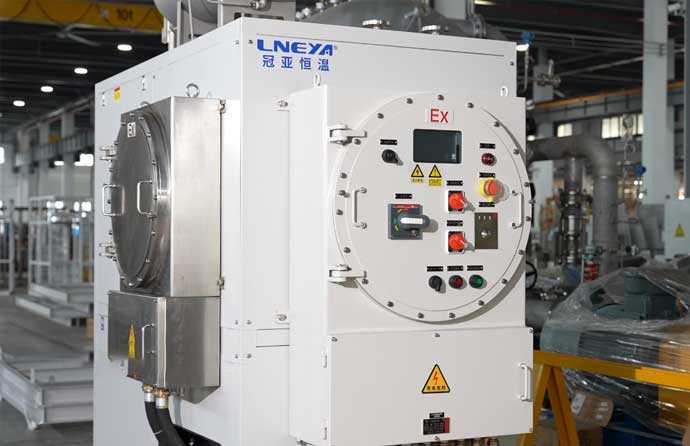
Customize Your Explosion Proof Chiller
Intrinsic safety technology limits energy release, while explosion-proof technology isolates the source of the fault. Both approaches keep your people and plant safe if applied in the right context. The best solution often combines elements of each.
If your project demands certified cooling systems, LNEYA can design a unit that meets international standards. Contact our engineering team today to discuss your process conditions and we will prepare a tailored solution that balances safety, performance, and cost.
FAQ

Recent Blogs
- Chiller Components and Refrigeration Fundamentals Guides
- Chiller Types and Selection Guides
- How Does a Peltier Cooler Work
- Peltier Chiller vs. Compressor Chiller
- What Is a Peltier Chiller
- OEM vs Aftermarket Chiller Spare Parts
- Chiller Surge
- Chiller Cooling Capacity Units
Catalog
- December 2025
- November 2025
- October 2025
- September 2025
- August 2025
- July 2025
- June 2025
- May 2025
- March 2025
- February 2025
- January 2025
- December 2024
- November 2024
- October 2024
- September 2024
- August 2024
- July 2024
- June 2024
- May 2024
- April 2024
- March 2024
- February 2024
- September 2023
- July 2023
- June 2023
- May 2023
- January 2023
Tag
air cooled chiller chiller Chiller Maintenance chillers Cold Assembly Freezer cooling chiller dynamic temperature control system energy efficient chiller heating circulator industrial chiller industrial chillers industrial cooling industrial freezer industrial refrigerator jacket reactor laboratory chiller low temperature chiller news process chiller process cooling reactor cooling reactor heating cooling refrigerated circulator screw chiller semiconductor chiller semiconductor test chiller sundi tcu temperature control test chamber thermostat ultra low temperature chiller vehicle test chiller water chiller water cooled chiller
Contact Us
Related Chillers


CONTACT US
TEL:
EMAIL:
WeChat & WhatsApp:

Wechat QR

Have a question or need a quote? Fill out the form below, and our team will get back to you within 24 hours.

