 LNEYA Industrial Chillers Manufacturer Supplier


What Is a Heating Circulator and How Does It Work
Temperature matters in every precise process. Small swings change results. Good control saves time and money. Heating circulator is a heating system commonly used in industrial applications to control the temperature of the process. This article explains its definition, structure, principle and application.
What Is a Heating Circulator?
A heating circulator is a device that heats a fluid and keeps it moving through a closed loop. The goal is steady temperature at the point of use. That point might be a reactor jacket, a test chamber, or a heat transfer plate. Unlike a simple heater, the circulator controls flow, monitors temperatures, and protects the system.
Engineers pick models based on flow rate, power, and temperature range. Those three define if a circulator will do the job.
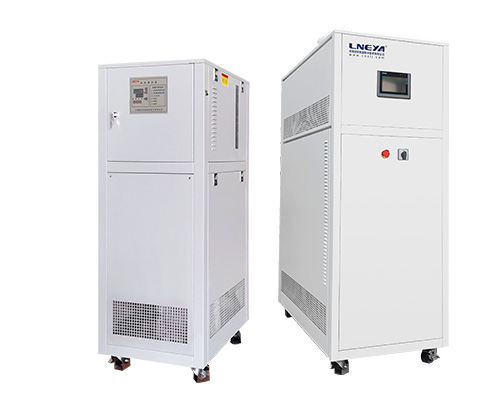
Main Components of a Heating Circulator
Heating element
The heater produces heat. In industrial units the element is typically stainless steel or Incoloy. These alloys resist corrosion at high temperature. Watt density matters. Lower watt density lasts longer. Higher watt density heats faster but increases scale risk in water systems.
Circulation pump
The pump sets flow rate. Choose a pump with enough head to overcome your system pressure drop. For lab loops flows are often in liters per minute. For larger process lines use gallons per minute data to size the pump.
Temperature controller
The controller reads a sensor and adjusts power. A well tuned PID prevents overshoot. Some units include temperature profiling. Profiles let you ramp at a set rate and hold phases automatically.
Expansion and safety components
Fluid expands when heated. An expansion vessel or expansion loop takes up that volume. Safety valves protect against overpressure. Low fluid level switches protect heaters from dry running. High temperature cutouts prevent thermal runaway.
Sensors and piping
Sensor placement matters more than many realize. Place the main sensor near the outlet that feeds your process. A second sensor on the return helps monitor delta temperature.
How Does a Heating Circulator Work?
Basic loop
At startup the heater brings tank fluid toward set point. The pump forces the warmed fluid through the external equipment. Cooler return fluid comes back to the tank and mixes. The controller watches the sensor and trims heat output down as you approach set point.
Feedback and stability
The outlet sensor tells the controller what the process sees. The return sensor helps detect flow problems or thermal inefficiency. When the return temperature trends up while outlet remains stable it often means reduced flow or fouling in heat transfer surfaces.
Ramp and dwell profiles
For many processes you do not want a sudden jump. A programmed ramp raises temperature at a controlled rate. A dwell holds temperature for a set time. This is useful in polymer curing tests or chemical reaction stages. Good profiles reduce thermal shock and protect materials.
Types of Heating Circulators
Water based circulators
Water is cheap and transfers heat quickly. Typical range is from near ambient up to about 95 ℃. These systems have fast response. Watch for scale when water quality is poor. Use stainless wetted parts for longevity.
Oil based circulators
Thermal oil handles much higher temperatures. Many oils are stable up to 300 ℃. Oil systems work where water would boil or oxidize. They transfer heat slower than water but remain stable at high set points. Pump selection must account for higher fluid viscosity.
Integrated cooling and heating units
Some chiller heater units combine heating and cooling in one chassis. These are useful when processes need fast temperature swings. They save floor space and reduce plumbing. However they cost more and need more complex controls. Choose them when you need both heating and chilled water in one loop.
What Is a Heating Circulator used for?
Heating circulators appear in labs and on process lines. Use cases include reaction control, materials testing, and hardware validation.
Chemical reactor jackets
Keep a reaction at a fixed temperature. Tight control prevents side reactions and improves yield. Set point accuracy matters more than raw power in many syntheses.
Semiconductor and electronics testing
Devices require controlled temperature during burn in and reliability tests. A circulator feeds thermal plates or chambers and provides stable thermal environment for repeatable failures and pass criteria.
Material and polymer testing
Curing schedules rely on timed temperature steps. A circulator with profiling makes these repeatable. Uniform flow through a platen or mold reduces gradients in the part and improves test validity.
Pilot plants and scale up
On a small pilot reactor you need predictable temperature behaviour. The circulator lets you test scale up with the same thermal control strategy you plan for production. That reduces surprises when you increase batch size.
Conclusion
A heating circulator is a practical tool for precise temperature work. It combines heat, flow, sensing, and smart control into one package. Select the right combination of heater power, pump capacity, and controller features.
LNEYA provides heating circulators with different performances and chiller heaters with integrated heating and cooling functions. If you have temperature control needs, you can contact our experts for free consultation.

Recent Blogs
- Chiller Components and Refrigeration Fundamentals Guides
- Chiller Types and Selection Guides
- How Does a Peltier Cooler Work
- Peltier Chiller vs. Compressor Chiller
- What Is a Peltier Chiller
- OEM vs Aftermarket Chiller Spare Parts
- Chiller Surge
- Chiller Cooling Capacity Units
Catalog
- December 2025
- November 2025
- October 2025
- September 2025
- August 2025
- July 2025
- June 2025
- May 2025
- March 2025
- February 2025
- January 2025
- December 2024
- November 2024
- October 2024
- September 2024
- August 2024
- July 2024
- June 2024
- May 2024
- April 2024
- March 2024
- February 2024
- September 2023
- July 2023
- June 2023
- May 2023
- January 2023
Tag
air cooled chiller chiller Chiller Installation Chiller Maintenance chiller refrigerant chillers Cold Assembly Freezer cooling chiller cooling heating system cooling system dynamic temperature control system energy efficient chiller explosion-proof chiller freezer heating circulator industrial chiller industrial chillers industrial cooling industrial freezer industrial refrigerator jacket reactor laboratory chiller low temperature chiller news oil chiller process chiller process cooling reactor chiller reactor cooling reactor cooling heating reactor heating cooling refrigerated circulator screw chiller semiconductor chiller semiconductor test chiller sundi tcu temperature control test chamber thermostat ultra low temperature chiller vehicle test chiller water chiller water cooled chiller
Contact Us
Related Chillers


CONTACT US
TEL:
EMAIL:
WeChat & WhatsApp:

Wechat QR

Have a question or need a quote? Fill out the form below, and our team will get back to you within 24 hours.

