 LNEYA Industrial Chillers Manufacturer Supplier


When to Choose a Screw Chiller: Key Considerations
A screw chiller uses a screw style compressor to move refrigerant and cool process water. If you need steady cooling, reliable modulation, and long service intervals, pick a screw chiller. It gives stable outlet temperatures under variable load.

Cooling Demand is High
Choose a screw chiller when your load routinely exceeds about 50 refrigeration tons or roughly 150 kilowatts.
When one machine must cover several production lines, a screw compressor gives you fewer starting currents and simpler piping. You avoid the complexity of matching many small compressors to a central distribution system.
The screw compressor moves more mass flow per revolution. That characteristic reduces the number of parallel compressors required for large duty. For installers this lowers mechanical complexity. For operators it reduces control burden.
Continuous Operation Required
If your process runs 24 hours a day, choose a screw chiller.
In continuous factories the daily runtime adds up fast. A screw compressor has fewer reciprocating parts that need frequent inspection. Oil management is automatic on most industrial units. That keeps compressor bearings lubricated and cool. The result is longer service intervals and predictable maintenance windows.
For plants that pay for lost production, fewer unscheduled stops matter more than a small upfront price difference.
Operating Conditions Fluctuate Frequently
When the heat load jumps during cycles or when test benches run in bursts, the screw chiller keeps conditions steady. It responds smoothly to load swings so chilled water does not overshoot or undershoot target values.
The sliding control range lets the compressor trim capacity rather than cycling off. That reduces thermal shock to process equipment and lowers stress on piping and heat exchangers. In lab testing and pilot lines where runs start and stop often, this control preserves product quality.
It also improves part load efficiency because the unit does not waste energy on repeated restarts.
High Temperature Difference or High Ambient Temperature
Screw chillers tolerate high pressure ratios and high condensing temperatures better than many other compressor types. This makes them a fit for hot climates or processes that demand a large difference between inlet and outlet water temperatures.
When condenser temperature rises, some compressors lose efficiency sharply. A screw compressor retains stable compression performance at higher lift. That matters if you cool hot process water or if outdoor units face long hot seasons.
In practice you will see smaller drops in capacity and less need for capacity staging. For installations with heat recovery loops the screw chiller accepts higher return temperatures without frequent trips.
Balance Capacity and Low Noise
You can get substantial cooling capacity with comparatively low vibration and less mechanical noise. That balance makes screw chillers useful where floor space sits near working areas or where vibration isolation is costly.
Rotary motion produces a steady torque curve. That removes the hammering pulses common to piston machines. Less pulsation reduces the sound pressure level and lowers transmitted vibration to building structures.
For facilities with test labs or sensitive instruments near the mechanical room, this reduces the need for heavy anti vibration mounts. It also simplifies pipe restraint design and extends the life of fittings.


Pursue Long Term Investment Return
A screw chiller usually costs more at purchase but it can cost less over the life cycle. The return comes from reduced maintenance, fewer unplanned outages, and better part load economy when the plant does not run at full capacity all the time.
A screw machine often saves energy during typical duty cycles thanks to smooth modulation and good efficiency at partial load. The maintenance plan tends to be predictable. Major service events happen after many thousands of hours rather than every few months.
For decision makers who account for downtime losses and production risk, the screw chiller often shows a faster payback over five to ten years.
Contact LNEYA for your screw chiller solution
LNEYA has over 15 years of experience in designing and manufacturing temperature control equipment. Our chillers play a role in many industries such as medical, semiconductor, new energy, and chemical industries.
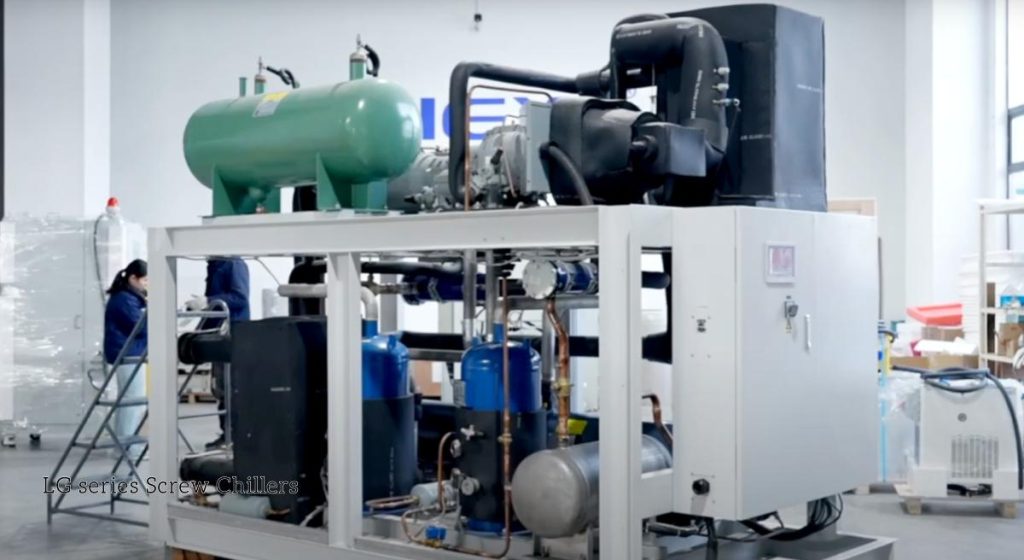
If you are looking for a reliable screw chiller supplier, we are happy to introduce you to the LG series screw chiller. Feel free to contact us to discuss your temperature control needs.

Recent Blogs
- Chiller Components and Refrigeration Fundamentals Guides
- Chiller Types and Selection Guides
- How Does a Peltier Cooler Work
- Peltier Chiller vs. Compressor Chiller
- What Is a Peltier Chiller
- OEM vs Aftermarket Chiller Spare Parts
- Chiller Surge
- Chiller Cooling Capacity Units
Catalog
- December 2025
- November 2025
- October 2025
- September 2025
- August 2025
- July 2025
- June 2025
- May 2025
- March 2025
- February 2025
- January 2025
- December 2024
- November 2024
- October 2024
- September 2024
- August 2024
- July 2024
- June 2024
- May 2024
- April 2024
- March 2024
- February 2024
- September 2023
- July 2023
- June 2023
- May 2023
- January 2023
Tag
air cooled chiller chiller Chiller Maintenance chillers Cold Assembly Freezer cooling chiller dynamic temperature control system energy efficient chiller heating circulator industrial chiller industrial chillers industrial cooling industrial freezer industrial refrigerator jacket reactor laboratory chiller low temperature chiller news process chiller process cooling reactor cooling reactor heating cooling refrigerated circulator screw chiller semiconductor chiller semiconductor test chiller sundi tcu temperature control test chamber thermostat ultra low temperature chiller vehicle test chiller water chiller water cooled chiller
Contact Us
Related Chillers


CONTACT US
TEL:
EMAIL:
WeChat & WhatsApp:

Wechat QR

Have a question or need a quote? Fill out the form below, and our team will get back to you within 24 hours.

