 LNEYA Industrial Chillers Manufacturer Supplier


What Is a Fluid Chiller
Maybe your lab process fails after hours of testing, or your production line struggles during hot days. These are signs you need a reliable temperature control solution. A fluid chiller sometimes called a process chiller or liquid chiller, removes heat from a circulating liquid and keeps your process consistent.
In this guide, you’ll learn exactly how a fluid chiller works, the different types available, what fluids can be used, and how it benefits your operation. By the end, you’ll know how to select a unit that improves efficiency, reduces downtime, and protects your investment.
How Does a Fluid Chiller Work?
A fluid chiller removes heat from a liquid loop and transfers it to air or water to maintain a steady temperature.
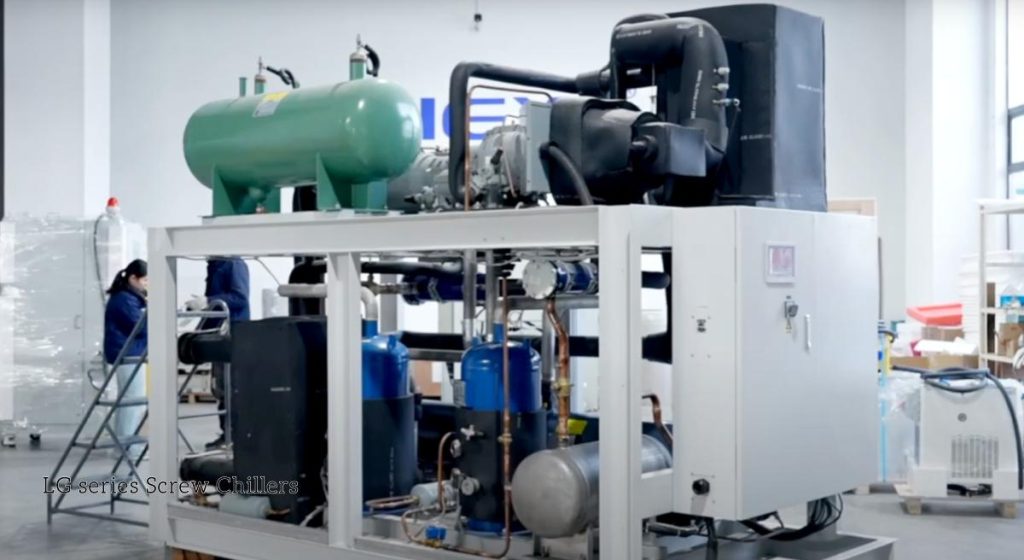
Key Components of a Fluid Chiller
A fluid chiller includes several critical parts that work together to move and reject heat efficiently.
The Cooling Process of a Fluid Chiller
The process begins when the warm fluid from your machine enters the chiller. Inside the evaporator, the refrigerant absorbs heat from the liquid and evaporates. The compressor then compresses this vapor, increasing its temperature and pressure.
Next, the hot refrigerant vapor flows into the condenser, where it releases heat into air or cooling water. The refrigerant cools and turns back into a liquid, completing the cycle. The expansion valve reduces its pressure again, preparing it to absorb heat once more.
What Types of Fluid Chillers Are There?
Fluid chillers come in air-cooled and water-cooled versions. Each type has unique advantages depending on your space, budget, and cooling capacity needs.
Air-Cooled Fluid Chillers
Air-cooled chillers use fans to blow air across the condenser coils, releasing heat directly into the surrounding environment. They are compact, simple to install, and require no external water supply.
For small labs, workshops, and test benches, an air-cooled fluid chiller is often the most practical choice. It fits easily indoors or outdoors, and maintenance is straightforward.
However, air-cooled models may lose efficiency in hot climates. When ambient air temperature rises above 35°C, cooling performance can drop. For that reason, facilities operating year-round in high heat may prefer a water-cooled alternative.
Water-Cooled Fluid Chillers
Water-cooled chillers use cooling towers or other water sources to remove heat from the refrigerant. Because water conducts heat better than air, these chillers achieve higher energy efficiency and more stable operation.
They are ideal for high-load, continuous-duty applications like chemical manufacturing, semiconductor testing, or pharmaceutical production. These industries often run 24/7, so temperature control must be precise and reliable.
While installation costs more upfront due to the need for a cooling tower, long-term energy savings often justify the investment. For large plants or centralized cooling systems, water-cooled chillers offer unmatched performance and longevity.
Not sure which chiller fits your process best?
What Fluids Can Be Used in a Fluid Chiller?
Fluid chillers can use water, glycol-water mixtures, or thermal oils depending on the temperature range and process requirements.
Water is the most common cooling medium. It’s affordable, safe, and efficient for moderate temperature control above 5°C. However, pure water can freeze or corrode metal components at low temperatures, so additives are often needed.
Glycol-water mixtures prevent freezing and protect against corrosion. These are widely used in low-temperature or outdoor applications, such as laser cooling or environmental test chambers. The ratio of glycol to water depends on the desired temperature.
Thermal oil is used for high-temperature control systems above 100°C. It has a higher boiling point and greater stability, making it ideal for chemical reactors or die-casting machines. However, oil systems require careful sealing and monitoring to avoid leaks or degradation.
What Are the Advantages of a Fluid Chiller?
A fluid chiller offers precise temperature control, higher energy efficiency, and better reliability across diverse industries.
Unlike simple cooling loops or air fans, a process chiller can maintain temperature within a narrow band, often within 0.1°C. This stability is vital for processes like medical imaging, laser cutting, or semiconductor fabrication.
A well-chosen chiller extends equipment life and prevents production losses caused by thermal drift. It also improves safety by keeping sensitive systems from overheating.
Modern chillers feature digital PID controllers and variable-speed compressors. These technologies match cooling output to real-time demand, reducing energy waste. Smart alarms and communication interfaces also allow remote monitoring and predictive maintenance.
What are liquid chillers used for?
LNEYA’s Fluid Chiller Solutions
From compact lab chillers to large industrial cooling systems, LNEYA delivers proven reliability and precise temperature control. Contact us today for a custom quote and discover how a well-matched chiller can optimize your process and lower long-term costs.
FAQ about Fluid Chillers


CONTACT US
TEL:
EMAIL:
WeChat & WhatsApp:

Wechat QR


