 LNEYA Industrial Chillers Manufacturer Supplier


Best Chiller Types for Heavy Industrial Applications
Heavy industrial environments generate massive, continuous heat loads that push standard chillers beyond their limits. Choosing the wrong system can mean costly downtime and wasted energy.
In this guide, you’ll learn how to identify the best heavy industrial chiller for your process, compare system types, and make a data-backed decision that keeps your operation efficient and reliable.
Why Do Heavy Industries Need Specialized Chillers?
Heavy industries need specialized chillers because their equipment generates high, continuous heat loads that standard chillers cannot handle.
Heavy industrial operations like steel casting, chemical production, and power generation run nonstop under extreme conditions. The heat produced from furnaces, reactors, or compressors is intense and constant. A regular industrial chiller often struggles to maintain stable outlet temperatures or recover quickly after load spikes.
A specialized industrial cooling system is designed for durability and efficiency. It uses stronger compressors, larger heat exchangers, and high-flow pumps to manage large-scale heat rejection. For example, a 500-ton heavy industrial chiller in a refinery may run 24/7 with minimal fluctuation, keeping process oil or cooling water at precise setpoints.
Without a dedicated heavy-duty design, equipment may overheat, coolant may degrade, and production may stop unexpectedly. Using a chiller engineered for high ambient temperatures and corrosive environments prevents costly downtime and extends system life.
What Are the Main Types of Heavy Industrial Chillers?
Heavy industrial chillers include air-cooled, water-cooled, oil-based, and glycol systems. Each type serves different cooling loads, environments, and temperature ranges.
Selecting the right industrial chiller starts with understanding your process needs. Large factories use air-cooled or water-cooled chillers for continuous duty. High-temperature operations rely on oil chillers. Low-temperature environments need glycol chillers to avoid freezing. Choosing the right type affects uptime, energy cost, and product quality.
Air-Cooled vs. Water-Cooled Chiller
Air-cooled chillers use ambient air to reject heat. Water-cooled chillers use a cooling tower and water loop.
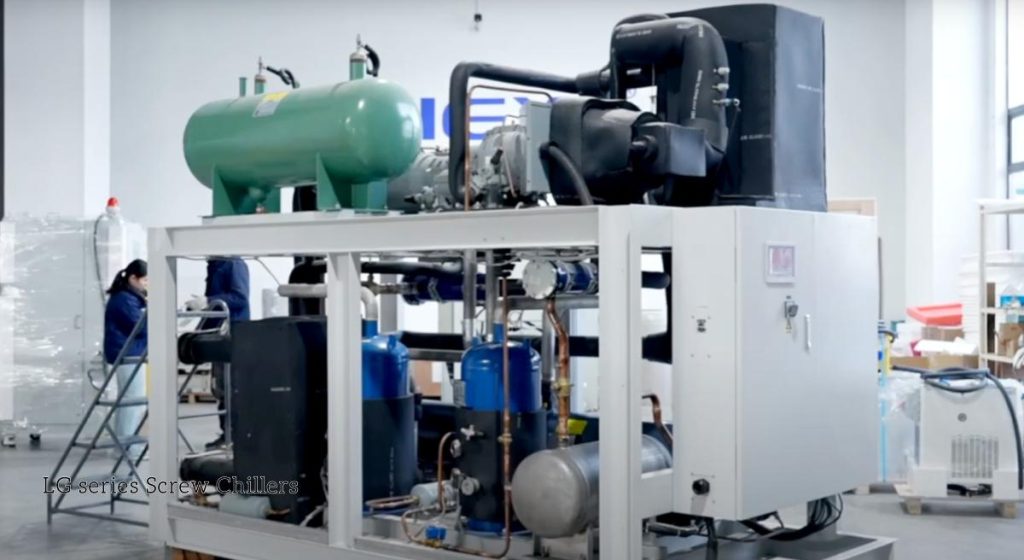
Air-cooled units are simple to install and ideal for dry regions or areas without water supply. They require less maintenance but consume more power during hot weather. Water-cooled screw systems are more energy-efficient, especially in large facilities with stable water quality. However, they need regular water treatment and tower cleaning.


Oil Chillers for High-Temperature Environments
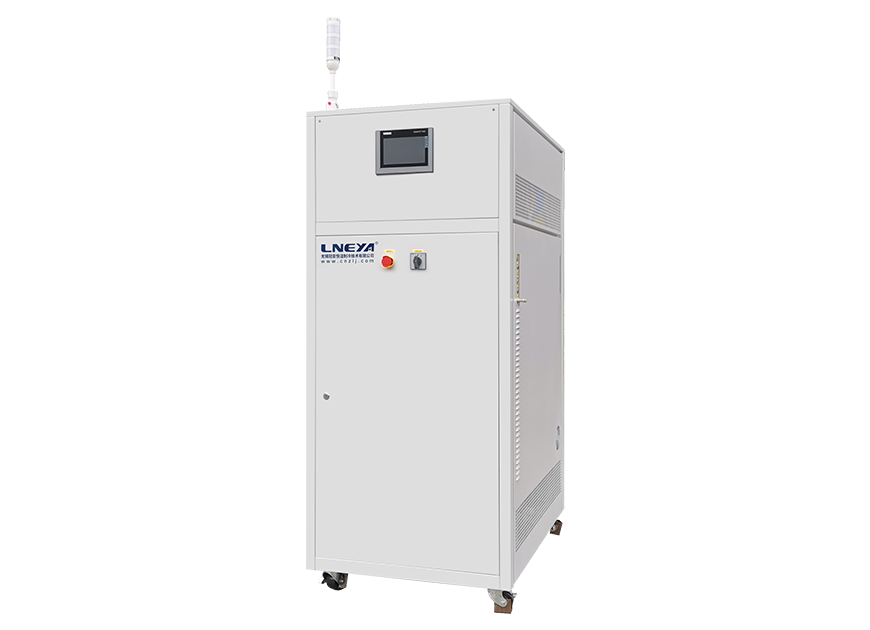
Oil chillers use thermal oil instead of water for cooling in high-temperature processes.
They are common in die casting, reactor temperature control, and semiconductor testing. Oil chillers can handle outlet temperatures above 200°C while keeping precise stability within ±0.5°C.
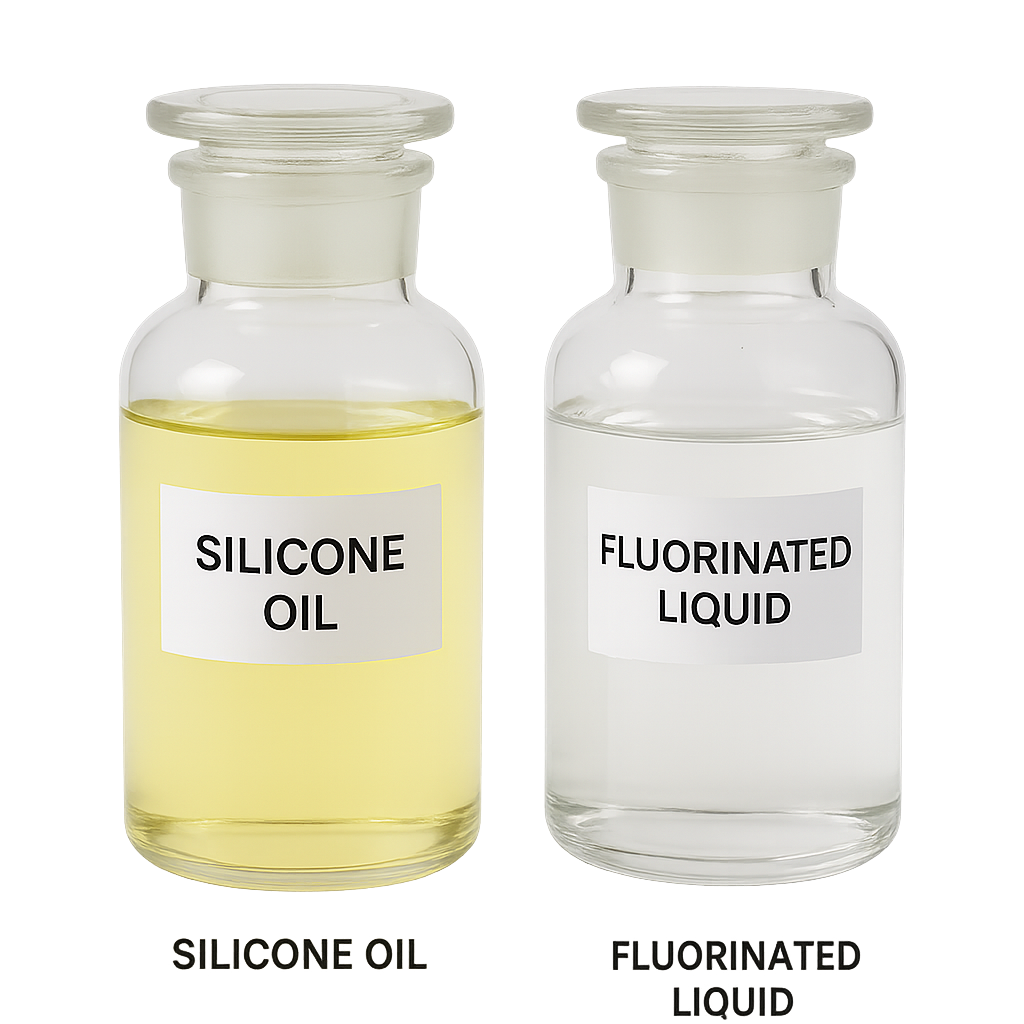
They prevent water boiling, corrosion, and scaling issues. When selecting, check the oil’s viscosity range and heat transfer coefficient. Poor oil choice can reduce pump life and temperature accuracy.
Glycol Systems for Low-Temperature Cooling
Glycol chillers use a water-glycol mix to reach sub-zero temperatures without freezing.
These systems are key for food processing, cold storage, and chemical reactions requiring below 0°C cooling. The glycol ratio usually ranges from 20% to 50% depending on the target temperature.
Too much glycol reduces efficiency, while too little risks freezing the heat exchanger. In practice, a brewery using a 30% glycol mix can cool fermentation tanks to -5°C safely.
Key Factors to Consider When Selecting a Heavy Industrial Chiller
When selecting a heavy industrial chiller, consider cooling capacity, reliability, and environmental conditions.
A well-matched chiller ensures stable operation, energy efficiency, and fewer unplanned shutdowns. Ignoring sizing or installation environment can cause poor temperature control and early compressor wear.
Cooling Capacity and Load
Always size the chiller for the actual heat load plus a 10–15% safety margin.
Measure the process heat gain, ambient heat, and equipment load accurately. Oversizing wastes energy and shortens compressor life. Undersizing leads to unstable temperatures and constant alarms.
Learn more:
how to calculate cooling capacity
Reliability, Maintenance, and Downtime
Industrial chillers run long hours, so reliability is critical.
Choose units with dual compressors or modular systems for redundancy. Easy-access panels and self-diagnostic controls reduce downtime. Schedule oil analysis, filter cleaning, and vibration checks every 1,000 hours.
Plants that track operating data extend chiller lifespan by 30%. Ignoring maintenance leads to clogged condensers and higher energy use.
Environmental Conditions and Installation Site
Ambient temperature, humidity, and air quality affect chiller performance.
Outdoor chillers need weatherproof casings and corrosion-resistant condensers. In dusty areas, add air filters and increase cleaning frequency. Indoor systems need strong ventilation to avoid heat buildup. For example, a foundry near coastal air should use anti-corrosion coatings, while a desert facility needs larger condenser surfaces for heat rejection.
Not sure which chiller fits your process best?
Applications of Heavy Industrial Chillers
Heavy industrial chillers are used in metal processing, chemical production, and energy systems to manage heat effectively.
Each sector has unique temperature control needs that affect equipment performance and product quality.
Metal Processing and Foundry
In foundries, chillers cool molds, furnaces, and hydraulic oil.
Precise cooling prevents metal deformation and improves casting quality. A 1°C temperature shift can change part dimensions. Water-cooled chillers with closed-loop systems keep cooling water clean and stable. Poorly sized chillers cause thermal shock and mold cracking.
Chemical and Petrochemical Plants
Chemical processes need accurate temperature control for reactions and distillation. Oil or glycol chillers keep reactors within narrow temperature bands. Stability within ±0.2°C ensures consistent product quality and reaction yield.
In a polymer plant, even a 2°C drift can alter molecular weight. Use corrosion-resistant heat exchangers to handle aggressive fluids.
Power Generation and Energy Storage
Power plants and battery energy systems use chillers to control generator, inverter, and battery temperatures.
Efficient cooling improves system lifespan and reduces failure risk. For lithium battery systems, glycol chillers maintain uniform cooling between modules, preventing thermal runaway.
In gas turbine facilities, chillers lower inlet air temperature to improve power output by up to 10%. Proper redundancy design ensures uninterrupted cooling during peak loads.
Find the Right Heavy Industrial Chiller for Your Process
LNEYA provides a full range of industrial chillers engineered for heavy industrial applications, including high-temperature oil chillers, low-temperature glycol chillers, and precision air-cooled and water-cooled systems. Our experts can help you design and select the most efficient solution for your process needs.
FAQ


CONTACT US
TEL:
EMAIL:
WeChat & WhatsApp:

Wechat QR


