 LNEYA Industrial Chillers Manufacturer Supplier


How Does a Chiller Work with a Double-Layer Glass Reactor
If you’ve ever worked in a pilot plant or a chemistry lab, you’ve no doubt seen a double-layer glass reactor, often with an industrial chiller set beside it. You’ve surely noticed: the reaction is transparent, so you can easily glance at the reaction condition. But the magic is actually in the jacket in which the coolant circulates, keeping the overall reaction temperature under your control. So how do the chiller and reactor work together?
What is a double-layer glass reactor?
A double-layer glass reaction vessel, or double-jacket glass reactor, is a double-layer glass reaction vessel comprising two layers of borosilicate glass with the inner glass being the reaction vessel for containing reactant/solvent/catalyst mixture and outer glass being the jacket where the circulation of coolant occurs. It is commonly applied in laboratory scale work, pharmaceutical syntheses, fine chemicals production, pilot scale production, and other applications where thermal control is needed.
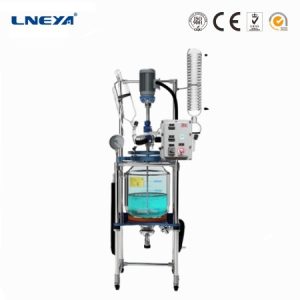
How does a double-layer glass reactor function with a chiller?
The glass reactor is linked with the chiller via pipes. Once the chiller reduces the temperature of the coolant at the set point temperature, it is sent from the outlet at the evaporator to the inlet at the reactor jacket, entering the jacket from there. Through the jacket flows the coolant, which gives a heat transfer with the reactants through the inner glass wall, taking away heat generated in reaction.
After absorbing heat, the coolant temperature rises and returns from the jacket outlet to the evaporator inlet. At this point, the refrigerant in the chiller returns to the evaporator, absorbing the coolant’s heat and cooling it to the set temperature, completing the cycle. A temperature sensor monitors the coolant’s temperature in real time, and the controller automatically adjusts the instructions to precisely control the coolant’s outlet temperature and the reaction temperature.

Challenges of double-layer glass reactor cooling system
Flow Rate
The coolant’s flow rate affect heat transfer efficiency. If the coolant flow rate is insufficient, heat from the reactants cannot be fully transferred to and removed from the coolant. This can cause the actual reactant temperature to exceed the set temperature, affecting the reaction rate and product conversion.
Furthermore, while a high flow rate can accelerate heat transfer, it can also increase the pressure within the jacket. If the internal pressure exceeds the pressure limit of the glass jacket, it could rupture. Furthermore, high flow rates can cause turbulence, which, over extended periods, can accelerate wear on joints and seals, impacting system stability.
Response Speed
Not only must a temperature control system for a reactor reach the desired temperature but it must also immediately compensate for temperature changes in order not to cause temperature lag. For very exothermic reactions like esterification reactions and hydrogenation reactions, if a cooling system does not instantaneously change the output coolant temperature and flow rate according to reaction temperature changes, the reactant temperature can immediately increase rapidly.
This can disrupt the reaction and pose serious safety risks. On a deeper note, many low-end chillers do not incorporate PID control but have great lag in adjusting the temperature with significant fluctuations which might be beyond acceptable limits.
System Sealing
Under high-pressure or low-temperature conditions, the most forgotten but most frequent problem is sealing of the cooling and the reactor system. Leaks at jacket seals under the coolant being a volatile or toxic liquid (glycol-water mixture, thermal oil) can pose a safety problem.
Additionally, repeated hot/cold temperature cycles an cause rubber seals to become brittle over time. A leaky cooling circuit under conditions of negative pressure or operating under vacuum can suction air or moisture into the jacket, having an impact on the efficiency of heat transfer along with system contamination.
Piping Design
A pipe diameter smaller than optimum size will cause high coolant flow rates, which raise system resistance and increase pump load. A pipe with a very large diameter will have more coolant sit for longer times, lowering the efficiency of temperature control. In addition, very long pipes or regular right-angle elbows can result in excessive loss of cooling for transport of coolants and raise system energy consumption. At low-temperature control, if the pipes become poorly insulated, loss of cooling energy can occur to the atmosphere and make the coolant warm up.
Temperature Control Precision
For reaction outcomes to be reproducible reaction to reaction, changes in temperature must be strictly controlled. Some chiller units have even just temperature feedback points at the inlet and outlet of the coolant but no temperature probes within the reaction container or at the inlet and outlet of the jacket.
This can lead easily to temperature lag along with temperature excursions. Also, if the reaction is exothermic and the temperature increases rapidly enough, insufficient capacity for cooling or early feedback from the chiller can lead to violent temperature fluctuations with attendant reaction anomalies.
Conclusion
Reactors of varying materials, designs, and operation require radically different cooling systems. Choosing a correct chiller not only decides temperature control but also production efficiency and the finished quality of the product. For selection advice or custom solutions, please contact LNEYA team.

Recent Blogs
- Chiller Components and Refrigeration Fundamentals Guides
- Chiller Types and Selection Guides
- How Does a Peltier Cooler Work
- Peltier Chiller vs. Compressor Chiller
Catalog
- December 2025
- November 2025
- October 2025
- September 2025
- August 2025
- July 2025
- June 2025
- May 2025
- March 2025
- February 2025
- January 2025
- December 2024
- November 2024
- October 2024
- September 2024
- August 2024
- July 2024
- June 2024
- May 2024
- April 2024
- March 2024
- February 2024
- September 2023
- July 2023
- June 2023
- May 2023
- January 2023
Tag
air cooled chiller chiller Chiller Installation Chiller Maintenance chiller refrigerant chillers Cold Assembly Freezer cooling chiller cooling heating system cooling system dynamic temperature control system energy efficient chiller explosion-proof chiller freezer heating circulator industrial chiller industrial chillers industrial cooling industrial freezer industrial refrigerator jacket reactor laboratory chiller low temperature chiller news oil chiller process chiller process cooling reactor chiller reactor cooling reactor cooling heating reactor heating cooling refrigerated circulator screw chiller semiconductor chiller semiconductor test chiller sundi tcu temperature control test chamber thermostat ultra low temperature chiller vehicle test chiller water chiller water cooled chiller
Contact Us
Related chillers


CONTACT US
TEL:
EMAIL:
WeChat & WhatsApp:

Wechat QR

Have a question or need a quote? Fill out the form below, and our team will get back to you within 24 hours.

