LNEYA Industrial Chillers Manufacturer Supplier


The safety of heat transfer oil in water-cooled chillers
In order to achieve better operating efficiency, water-cooled chillers need to choose branded heat transfer oil, but you need to pay attention to safe placement, a little carelessness will cause adverse effects.
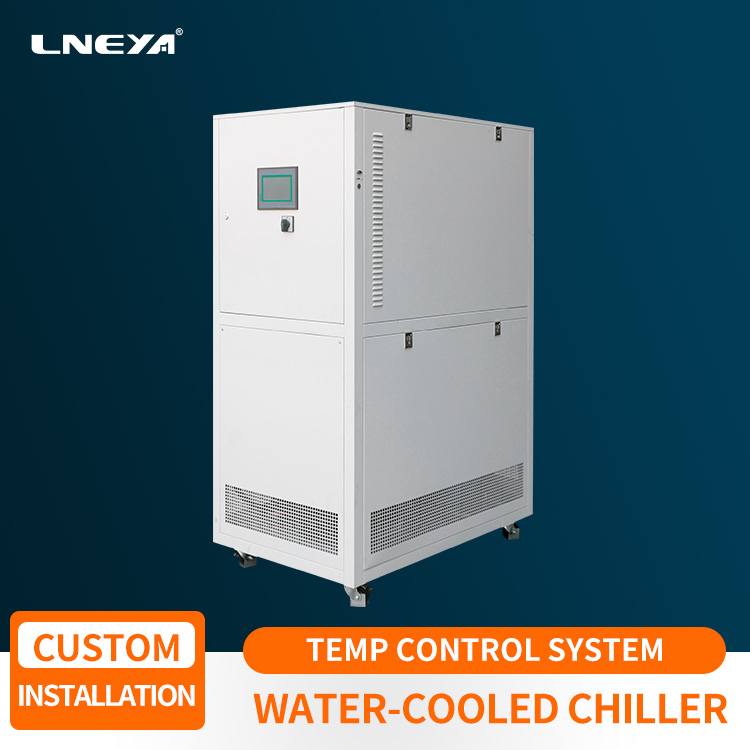
Although the heat transfer oil of the water-cooled chiller has a higher boiling point, it is still a flammable liquid. Therefore, you should pay attention to safety when using it. Improper use may cause fire. The cause of the fire is caused by leakage. There are four main types of leakage and fire:
A. Fire in the heat preservation area.
Common misfire types in organic heat transfer oil systems. The heat transfer oil leaks at the instrument connection and penetrates into the heat preservation area. Then, in the presence of air, the circulating liquid and pipe heat will heat the heat conduction oil and gradually oxidize the liquid, causing the heat preservation area to be ignited and cause a fire.
B. Fire caused by pipeline leakage or burst.
The leakage or burst of the pipeline caused the heat transfer oil to flow into the hot gas flame zone and cause a fire.
C. The flash point causes a fire.
The factors that cause the flash point fire are higher than the low flash point temperature of the heat transfer oil, and there are heat transfer oil, air and fire sources at the same time.
D. Fire caused by process raw materials:
The main reason is that the heat-conducting oil leaks into the heating system, and its process raw materials are easily oxidized and have oxidizing substances, which causes a fire.
In addition to the above four types of fires, more attention should be paid to the use of gas-phase systems. If a large amount of heat transfer oil vapor leaks, aerosol mist may be formed. This mist may cause explosion and combustion in the air when exposed to an open flame.
Therefore, the heat transfer oil of water-cooled chillers is related to its operating efficiency and safety, so it is necessary to do a good job in the repair and maintenance of the hot oil system to prevent the leakage of the heat transfer oil.
Related recommendations
-

Operation LNEYA high and low temperature cycle machine note
1194LNEYA high and low temperature cycle machine uses mechanical refrigeration to obtain low temperature heating tube heating to obtain high temperature. It is used with various glass reactors and reactors. What should be paid attention to when using ...
View details -
Configuration form of circulating heating unit for laboratory
978The standard model of the circulating heating unit for LNEYA laboratory is: SUNDI, the temperature range is from room temperature to minus 120 degrees Celsius, and the capacity can be divided into 5L, 10L, 20L, 30L, 40L, 50L, 80L, 100L, larger cap...
View details -
Meet at booth 6002 of Shanghai World Expo Hall【Testing Expo】9.14-9.16
962Exhibition name: Shanghai International Automobile Testing and Quality Control ExhibitionExhibition time: September 14-16, 2020Booth number: 6002Exhibition address: Shanghai World Expo Exhibition Hall, Hall 1,
View details -
Hot and cold rapid temperature change test chamber common fault
1102In the high-temperature test of the hot and cold rapid temperature change test chamber, once the temperature change does not reach the test temperature value, in this case, the electrical system can be inspected and the faults can be eliminated on...
View details