LNEYA Industrial Chillers Manufacturer Supplier


Is the low temperature cooling unit – 120 degrees cooling effect reliable?
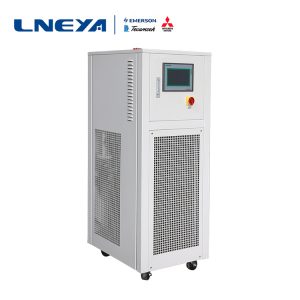
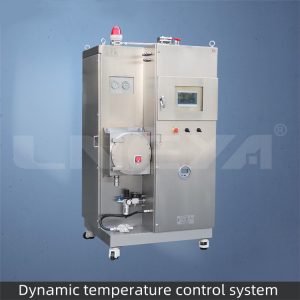
LNEYA specializes in the production of single-fluid cryogenic cooling units, the cooling temperature range is from -150 degrees to -5 degrees, which can meet different cooling temperature requirements. The products are widely used in low temperature reaction fields in chemical, pharmaceutical, biochemical and other industries, with fast cooling speed, safety and reliability. The product uses a 7-inch color touch screen to display input and record temperature curves. The entire system is a fully closed system, and there is no water absorption during low temperature operation, ensuring the purity of the cold heat transfer medium, preventing ice crystals, and improving the life of the heat transfer fluid.
FEATURES:
1. Temperature adjustment range: -150 degrees to -5 degrees, temperature control accuracy ± 1 ℃ refrigeration;
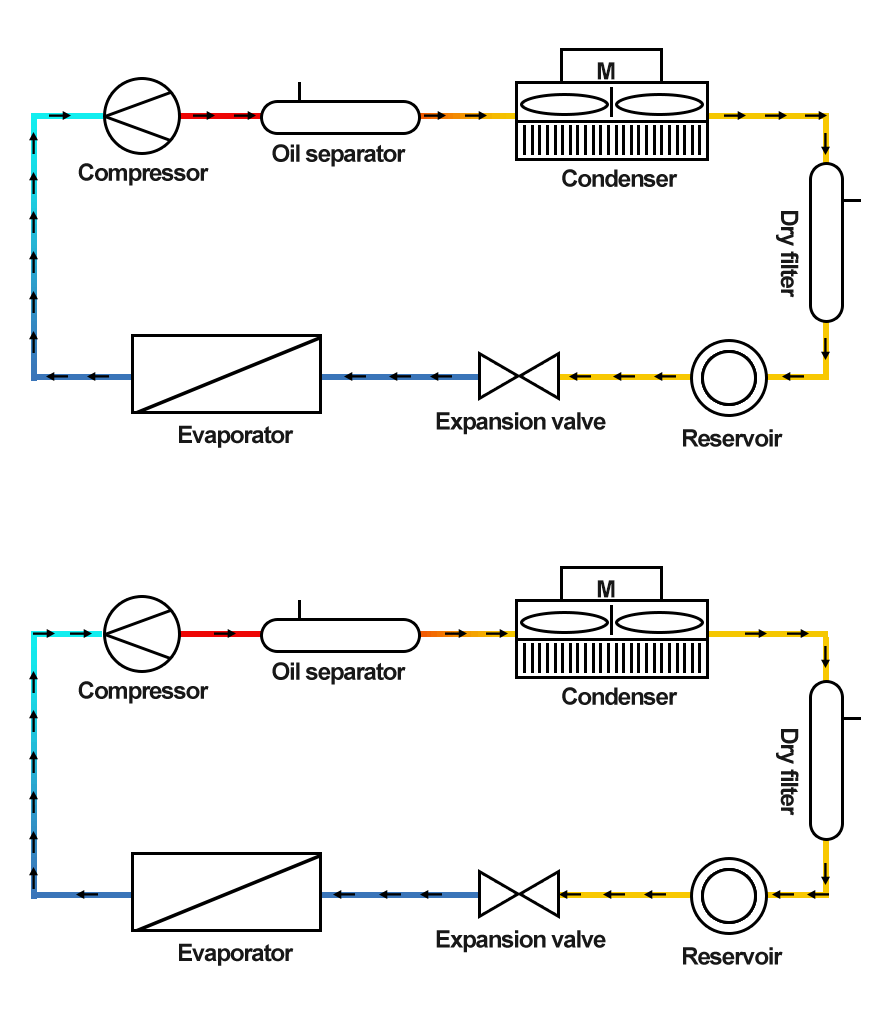
2. Adopt cascade refrigeration, cooling capacity: 1 to 1000KW are available;
3. With RS485 and R232 interfaces, it can communicate with the computer, so as to accept the setting and control of the computer, and transmit the measured temperature to the computer;
4. Optional imported heat transfer fluid;
5. The liquid storage tank and pipeline are sealed and pressurized to prevent the refrigerant from volatilizing, dew condensation and freezing, and have liquid level indication;
6. For small load heating, the hot gas bypass of the compressor can be used to heat the load;
7. Multiple alarm protections: water cutoff, high water temperature, circulation pump failure, compressor overheating, high pressure, overcurrent, phase loss, phase continuity, etc.;
8. Heat dissipation method: air cooling and water cooling are optional, and the air cooling condenser can be placed outdoors.
The application of the refrigerant carried by the cryogenic chiller:
1. The load volume of the general user is relatively large. If the load needs to have a uniform temperature, it must be filled with refrigerant. However, at normal temperature, a large amount of low-temperature refrigerant will become gas, and the volume and pressure of the gas will be huge, and the equipment itself will not be able to meet it;
2. The load on the user site is far away from the refrigeration room, and the load area is usually a clean, explosion-proof and quiet area. The refrigerant circulation system can separate the cryogenic unit and the load area, making the whole system more reliable.
3. Usually, the cooling capacity is to cool the material in the load through the heat exchange coil in the load. Once the heat exchange coil leaks, it may cause pollution to the material, and the refrigerant system usually uses a solvent with the material. substance, so even if it leaks, the possibility of contamination can be completely avoided;
4. The refrigerant is also a carrier for storing cold energy. When the load changes greatly, it can be adjusted by the refrigerant. This is conducive to temperature control and energy saving. Generally speaking, the greater the load fluctuation, the greater the amount of refrigerant required;
5. The heat exchange efficiency is higher than that of liquid nitrogen. The liquid nitrogen uses the latent heat of evaporation to release the cooling capacity. After the liquid nitrogen absorbs heat, it becomes a gaseous state. The gas-liquid two-phase mixing state occurs in the coil, resulting in a large air resistance and a sharp decrease in the flow rate, so that the liquid nitrogen cannot be completely combined with the liquid nitrogen. The tube wall is in contact, and the heat exchange efficiency is greatly reduced;
6. The refrigerant generally uses Glacier refrigerant (freezing point -118 ℃) dichloromethane (boiling point 40 ℃, freezing point -95 ℃), alcohol (boiling point 78 ℃, freezing point -114 ℃), dichlorofluoroethane (boiling point 32 ℃) , freezing point -103 ℃), trifluorodichloroethane (boiling point 28.7 ℃, freezing point -107 ℃), difluorochloroethane (boiling point -10 ℃, freezing point -131 ℃), non-toxic, non-flammable, environmentally friendly, Inexpensive. The circulation of the refrigerant adopts a magnetic circulation pump to reduce the influence of pollution and low temperature on the bearing seal.
Related recommendations
-

What are the applications of steam circulators in chemical industry?
1486The steam circulator in the chemical industry is a temperature control equipment in the pharmaceutical and chemical industry. When users operate, they need to understand the performance and maintenance knowledge in order to operate the equipment e...
View details -
Installation points of cryopumps in cryogenic refrigerators
1836In the construction of the cryogenic refrigerator, the cryopump is a must. The low temperature freezer manufacturer LNEYA tells everyone that the cryopump should be operated according to the requirements when it is installed. Installation faciliti...
View details -
High temperature test equipment related troubleshooting
1646The high temperature test equipment is mostly caused by water shortage in the water circulation. This way, the purified water is replenished to the water tank until the water level meter on the lower right side of the water tank reaches about 80% ...
View details -
Operating instructions for the chiller, a laboratory process temperature control cycle system
1696The heat transfer medium of the laboratory process temperature control circulation system chiller uses oil and water. It uses electric heating to heat the heat transfer medium (heat transfer oil or water) that is forced to circulate in the pipelin...
View details