LNEYA Industrial Chillers Manufacturer Supplier


Detailed Operating Instructions of Industrial Chiller
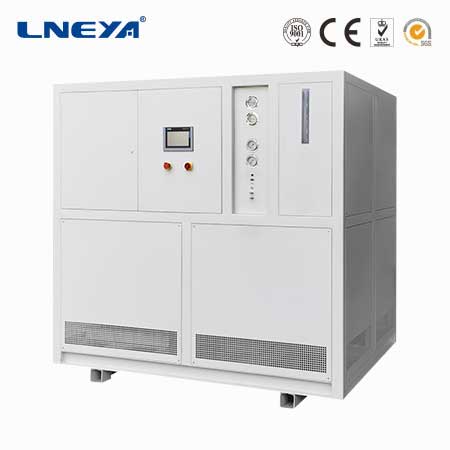
The installation procedures of water
chiller include:
1. During installation, please check
whether the machine is damaged and select a suitable place for installation and
future maintenance. The site for installing the unit must be the floor or
installation pad, with a levelness within 6.4mm, and can bear the operating
weight of the unit.
2. The chiller shall be placed in the
machine room with room temperature of 4.4-43.3 ℃, and there shall be enough space around and above the unit for
daily maintenance.
3. At one end of the unit, a pipe
extraction space for cleaning the condenser tube bundle shall be reserved, and
door holes or other holes at appropriate positions can also be used.
4. Select water pipes with appropriate pipe
diameter, cooling system and cold water system when the unit operates at
maximum power, and connect them correctly.
5. For ordinary applications, the water
flow velocity through the evaporator and condenser is allowed to be between
1.0-3.6m/s.
6. The water flow shall be stable under any
load.
7. All cooling water pipes shall be
designed and installed according to the conventional method. The chilled water
pump shall be located on the inlet pipe of the chiller to ensure the positive
pressure and flow in the unit. When piping, damping pipes shall be set to
ensure proper elasticity, and prevent the water in the evaporator from being
drained when the water pump stops.
8. The pipeline shall be firmly supported
independent of the chiller to avoid stress on the components of the chiller.
9. In order to reduce noise and vibration,
it is better to install vibration isolator on the pipeline.
10. In order to use the chiller
economically and effectively, it is recommended to invite water treatment
experts to analyze the water supply quality of evaporator and condenser. Poor
water quality will cause scale, affect heat transfer, or produce corrosion
precipitation, affect the performance of the unit and increase operation and
maintenance costs.
11. Generally speaking, proper water
treatment and regular cleaning can maintain its good performance.
12. Please install a filter at the inlet of
the water pipe and clean it regularly.
13. After leak test, all nozzle openings
must be treated with rust prevention.
14. In order to facilitate daily
maintenance, the user can take some (or all) of the following measures: the
pressure gauge and stop valve with cock can be installed on the inlet and
outlet pipes of cooling water and chilled water, close to the chiller as far as
possible;
Lifting rails and beams can be erected
above the equipment to facilitate maintenance.
Related recommendations
-
Maintenance of the Condenser in Low Temperature Chillers
1365In recent years, with the improvement of China's industrial production level, many professional industrial machinery and equipment provide greater help for different industrial production. As a very practical industrial refrigeration equipment, l...
View details -

What should we pay attention to when purchasing cooling equipment for industrial chiller units?
1316When many customers buy refrigeration equipment for industrial chiller units, they don't know what the key points are. Next, let me talk to you. 1. It should be determined according to the use, refrigerating capacity, local power supply, water sou...
View details -
Shutdown method in the case of high-precision high-low temperature circulator failure
1775The high-precision high-low temperature circulator is one of the equipments used in the pharmaceutical and chemical industry to support various reactors. If users encounter an abnormal power outage during use, they should pay attention to operatio...
View details -
What is the reason why the industrial chiller system cannot be cooled
1854Let the LNEYA technical engineer explainthe reason for everyone: The first one: The chiller system fails tolower the temperature during the first use, or there is a problem with theinstallation of the industrial water chiller, cooling tower, ...
View details