LNEYA Industrial Chillers Manufacturer Supplier


Maintenance steps of slope heating and cooling cooling heating thermostat
The slope temperature rise and fall cooling heating thermostat is the center to clean dust, garbage, etc. To clean and change inspection, inspection can find problems, find the potential defects of the slope temperature rise and fall high and low temperature integrated machine, and deal with it in time.
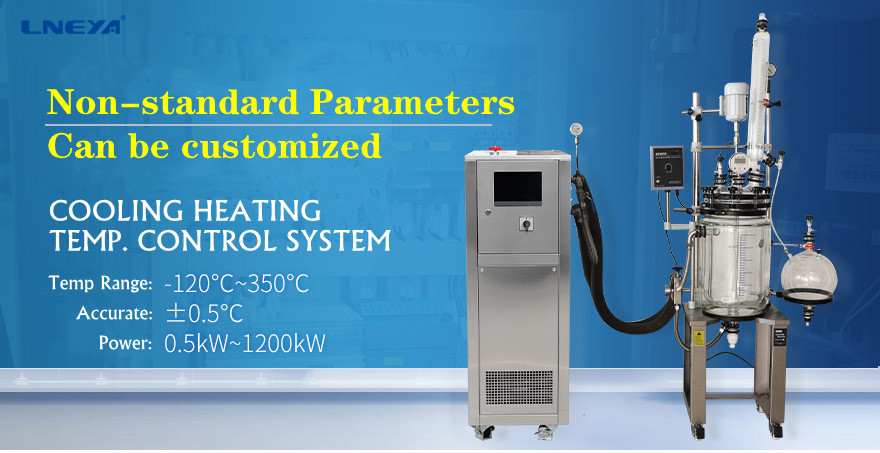
To maintain and improve the results of the initial cleaning in the first stage, it is necessary to eliminate the root causes (generating sources) of dust and pollution. For this purpose, countermeasures such as elimination, capping, and sealing can be taken. For parts that are difficult to maintain, such as refueling, cleaning, decontamination, etc., effective countermeasures should also be taken to improve the maintainability of the slope heating and cooling thermostat.
Establish standards for cleaning, lubrication, inspection and maintenance. Who should be specified in the standards? when? do what? where? How to do it?
Give full play to the inherent functions of the slope heating and cooling thermostat, learn the structure, function and judgment criteria of the slope heating and cooling thermostat, check the appearance of each main part, find the defects and restore them, and enable yourself to grasp the necessary Check skills.
According to the standards established in the third and fourth steps, the standards are fully complied with and implemented. This is the benchmark for self-inspection.
The activity based on the slope temperature rise and fall cooling heating thermostat is to expand the scope of activities to the peripheral slope temperature rise and fall high and low temperature integrated machine, and the entire workshop. Reorganization is aimed at tools and fixtures, semi-finished products, defective products, etc. in the workshop, and formulates management benchmarks to reduce objects, incidents, and other management objects, and simplify them as much as possible. The rectification is to observe (maintain) the established standards and gradually improve them so that the operators can easily follow them.
Establish the awareness of continuous improvement, continuously carry out the PDCA cycle, continuously improve the slope temperature rise and fall cooling heating thermostat, and achieve self-management.
Related recommendations
-

What are the common debugging problems in low temperature refrigeration baths?
2126When the low-temperature cooling bath is in debugging, if the local cooling effect is not good, the system may be blocked by foreign matter or the system design is unreasonable and cannot be adjusted normally. At this time, LNEYA removes foreign m...
View details -
LNEYA jet cooling heating temperature control device application note
1499The jet cooling heating temperature control device is applied to components to provide accurate and rapid ambient temperature for chips, modules, integrated circuit boards, electronic components, etc., and is indispensable for product electrical p...
View details -
Process description of LNEYA screw chiller
1517LNEYA screw chiller is suitable for all kinds of chemical, pharmaceutical, mechanical and other fields of production process cold source, can provide -25 ° C ~ 30 ° C chilled water, can be used as ice cold storage, low temperature air supply and o...
View details -
The reason for the poor cooling effect of the air-cooled chiller of the semiconductor heat sink ther
1652Semiconductor heat sink constanttemperature table Air-cooled chiller is one of the equipment for temperaturecontrol in the semiconductor industry. If the cooling effect is not good, itwill affect the use.The occurrence of this situation is rela...
View details