 LNEYA Industrial Chillers Manufacturer Supplier


What Is a Heat Pump Chiller
Cooling and heating are often considered separate tasks because they often require different equipment and take up more space. A heat pump chiller changes that. It moves heat where it’s needed, while also providing cooling.
What is a Heat Pump Chiller?
A heat pump chiller is a refrigeration system that provides chilled water while recovering heat for reuse. Unlike a standard industrial chiller, the heat released from its condenser is not directly expelled into the air or a cooling tower.
Instead, the condenser side uses water to capture this heat and transfer it for process heating or space heating. For processes that require both cooling and heating, a heat pump chiller is often preferred over heating-only boilers or cooling-only chillers.
How Does a Heat Pump Chiller Work?
Similar to a standard industrial chiller, a heat pump chiller relies on an evaporator, compressor, condenser, and expansion valve for its refrigeration cycle. The main difference lies in how the condenser is used.
In cooling mode, the chiller absorbs heat from the chilled water loop, which comes from the process or equipment, and releases it into cooling water or the air. When heating is needed, the heat is not discarded but is directed to another water loop on the condenser side, typically a hot water tank or a heating circuit.
The system uses valves to route the heat where it’s needed. Sensors continuously monitor the temperatures on both the chilled side and the condenser (hot water) side, allowing the controller to adjust flow rates according to setpoints.
Inverter compressors and electronic expansion valves enable smooth capacity changes, avoiding unnecessary on-off cycling. Essentially, the chiller’s job is to move heat; the difference is whether the absorbed heat is discarded or captured for reuse.
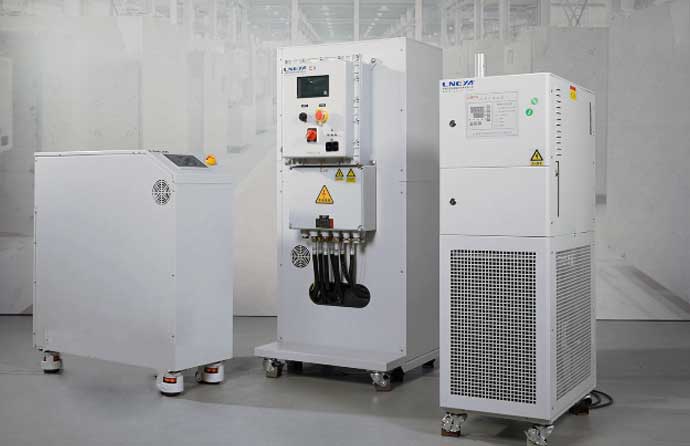
What Are the Advantages of a Heat Pump Chiller?
Lower Energy Use
You reuse heat instead of creating it from a separate burner or electric heater. That often lowers total energy use. Typical savings depend on how much useful heat you can capture and use. In many cases, buildings or plants see double-digit percent reductions in total fuel or electricity compared to separate boiler and chiller setups.
Provide Cooling and Heating from the Same System
Space and piping get simpler. One system, fewer components, fewer control points. For retrofit jobs, that can cut material and labor costs. For new builds, it reduces mechanical room space. It also simplifies maintenance conversations, because you have one vendor and one control strategy to tune.
Smaller Footprint
A combined unit takes less floor area than a chiller plus a boiler plus buffer tanks and piping. That matters in tight utility rooms or city-center sites. It also eases installation logistics; fewer large lifts and less heavy civil work.
Reduced Carbon Emissions
When you lower fuel use, you lower CO2. If a site replaces a gas boiler with heat recovered from a chiller, the direct fossil fuel burn drops. Combine that with higher electric efficiency and you get measurable emissions reductions, which helps with environmental reporting or sustainability targets.
Where Are Heat Pump Chillers Used?
Commercial Buildings
Offices, hotels, hospitals — many of these places need cooling in some zones while heating is required in others. A heat pump chiller balances these demands. That is handy in mixed-use buildings where rooftop or basement mechanical space is constrained.
Industrial Processes
In many factories, machines and processes naturally produce heat. Think of an injection molding line or a printing press—those lines spit out more heat than you might expect. Instead of venting it all away, a heat pump chiller can grab that energy and put it to work.
The heat might go to preheating tanks, warming space, or even keeping certain process lines at the right temperature. That way, fuel burners run less, temperatures stay steadier, and the operation just flows smoother.
District Cooling and Heating
In district systems, a central plant serves multiple buildings. Heat pump chillers can reduce the need for separate boiler plants. They let the district operator move energy around the network more flexibly, which is good for load balancing and for reducing peak supply needs.

Explore high-efficiency and energy-saving chiller solutions!
What Is the Difference Between a Heat Pump Chiller and a Conventional Chiller?
Compared with a conventional chiller, the difference is in how the condenser is used. A standard chiller takes heat from the chilled loop and dumps it outside. A heat pump chiller captures that same heat and delivers it wherever it’s needed. That means extra piping, some smart valves, and controls that know when to send the heat here or there.
The practical impact is clear. On the energy side, you don’t need as much extra heat from a boiler or electric heater. Over time, even if the upfront cost is higher, the lower fuel bills and reduced equipment count usually make it worth it.
Customize Your Heat Pump Chiller with LNEYA
Looking for a reliable heat pump chiller or heat recovery chiller for your new project? LNEYA is always ready to provide you with one-stop customization services and fast quotes.

Recent Blogs
- Chiller Components and Refrigeration Fundamentals Guides
- Chiller Types and Selection Guides
- How Does a Peltier Cooler Work
- Peltier Chiller vs. Compressor Chiller
- What Is a Peltier Chiller
- OEM vs Aftermarket Chiller Spare Parts
- Chiller Surge
- Chiller Cooling Capacity Units
Catalog
- December 2025
- November 2025
- October 2025
- September 2025
- August 2025
- July 2025
- June 2025
- May 2025
- March 2025
- February 2025
- January 2025
- December 2024
- November 2024
- October 2024
- September 2024
- August 2024
- July 2024
- June 2024
- May 2024
- April 2024
- March 2024
- February 2024
- September 2023
- July 2023
- June 2023
- May 2023
- January 2023
Tag
air cooled chiller chiller Chiller Installation Chiller Maintenance chiller refrigerant chillers Cold Assembly Freezer cooling chiller cooling heating system cooling system dynamic temperature control system energy efficient chiller explosion-proof chiller freezer heating circulator industrial chiller industrial chillers industrial cooling industrial freezer industrial refrigerator jacket reactor laboratory chiller low temperature chiller news oil chiller process chiller process cooling reactor chiller reactor cooling reactor cooling heating reactor heating cooling refrigerated circulator screw chiller semiconductor chiller semiconductor test chiller sundi tcu temperature control test chamber thermostat ultra low temperature chiller vehicle test chiller water chiller water cooled chiller
Contact Us
Related Chillers


CONTACT US
TEL:
EMAIL:
WeChat & WhatsApp:

Wechat QR

Have a question or need a quote? Fill out the form below, and our team will get back to you within 24 hours.

